The fascinating (and terrifying) story of Meri

2026 · 59 slides · Baltic Sea & outreach

A reader’s version of the talk I gave with the great Katja Laingui at Otaniemi upper secondary school on 27 October 2026: the story of Meri, a white-tailed eagle, what her family tells us about the health of the Baltic Sea and why HELCOM exists.
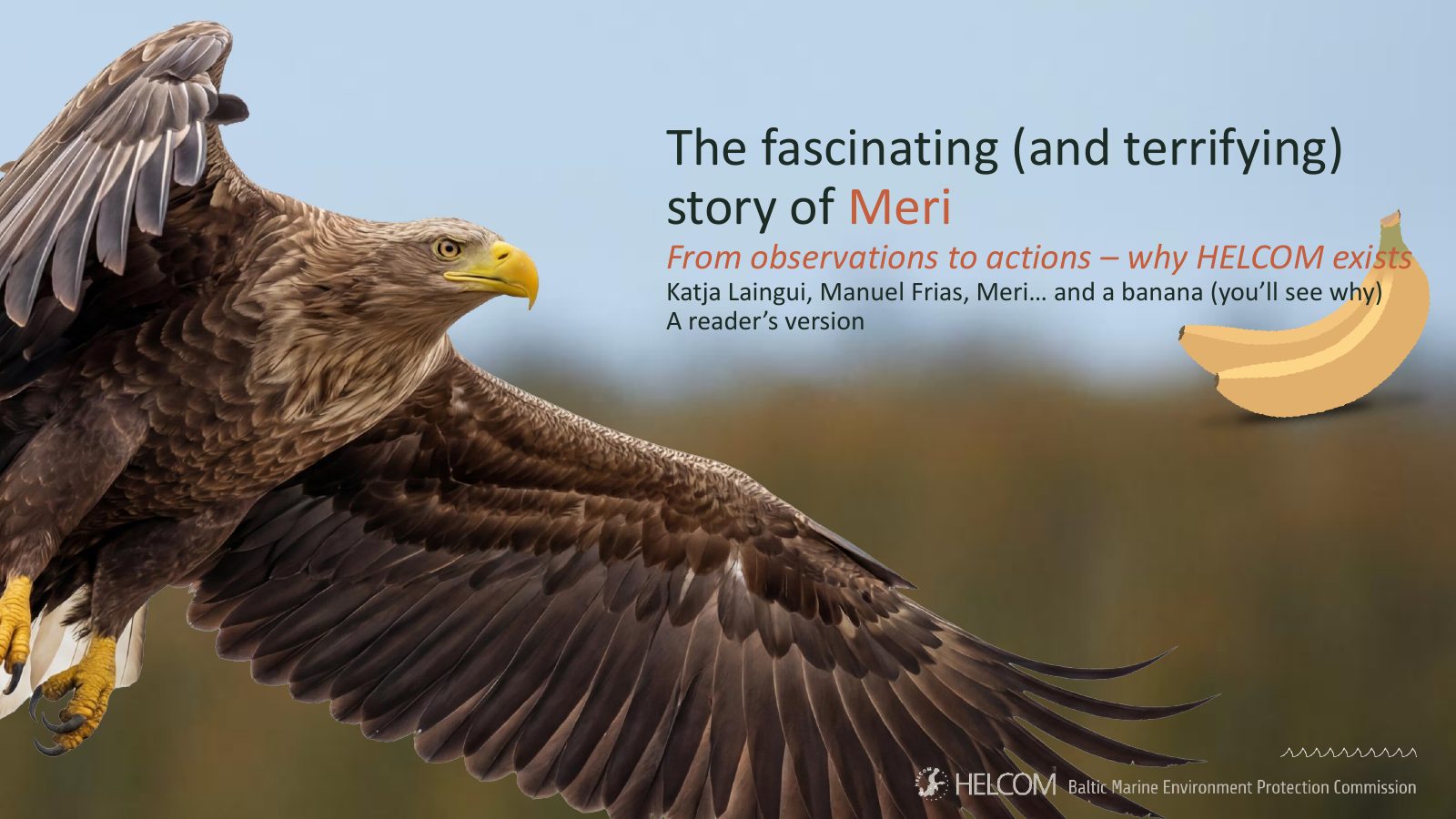
Slide 1 of 59: The fascinating (and terrifying) story of Meri From observations to actions – why HELCOM exists Katja Laingui, Manuel Frias, Meri… and a banana (you’ll see w…
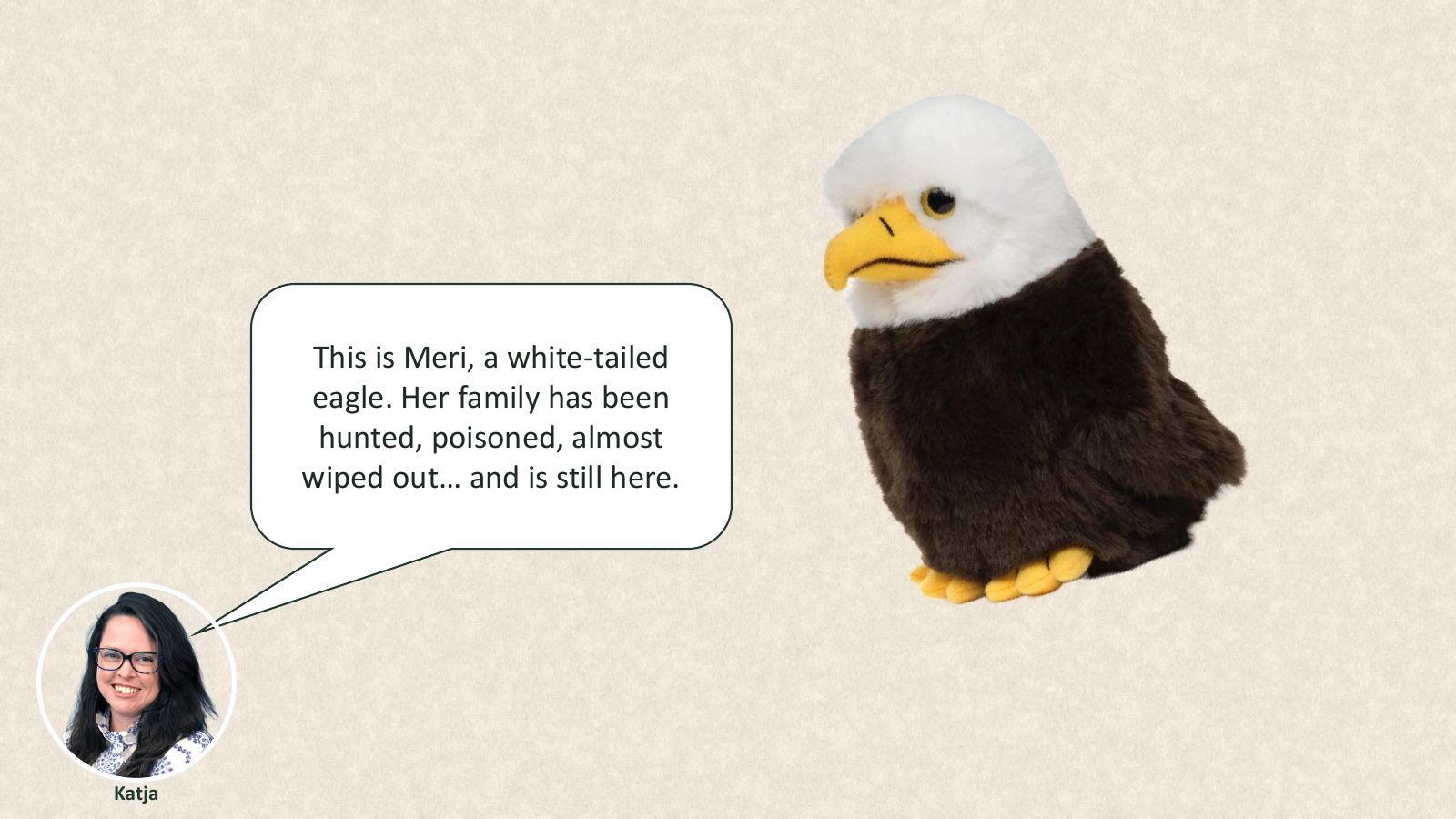
Slide 2 of 59: This is Meri, a white-tailed eagle. Her family has been hunted, poisoned, almost wiped out… and is still here. Katja
Slide 3 of 59: Meri’s family were the first to tell us that the Baltic Sea was getting sick. Not with words… …with their eggs. Let’s find out how. Katja Manuel
Slide 4 of 59: First, let’s check where Meri lives. Katja
Slide 5 of 59: Meri, the messenger Where does Meri live?
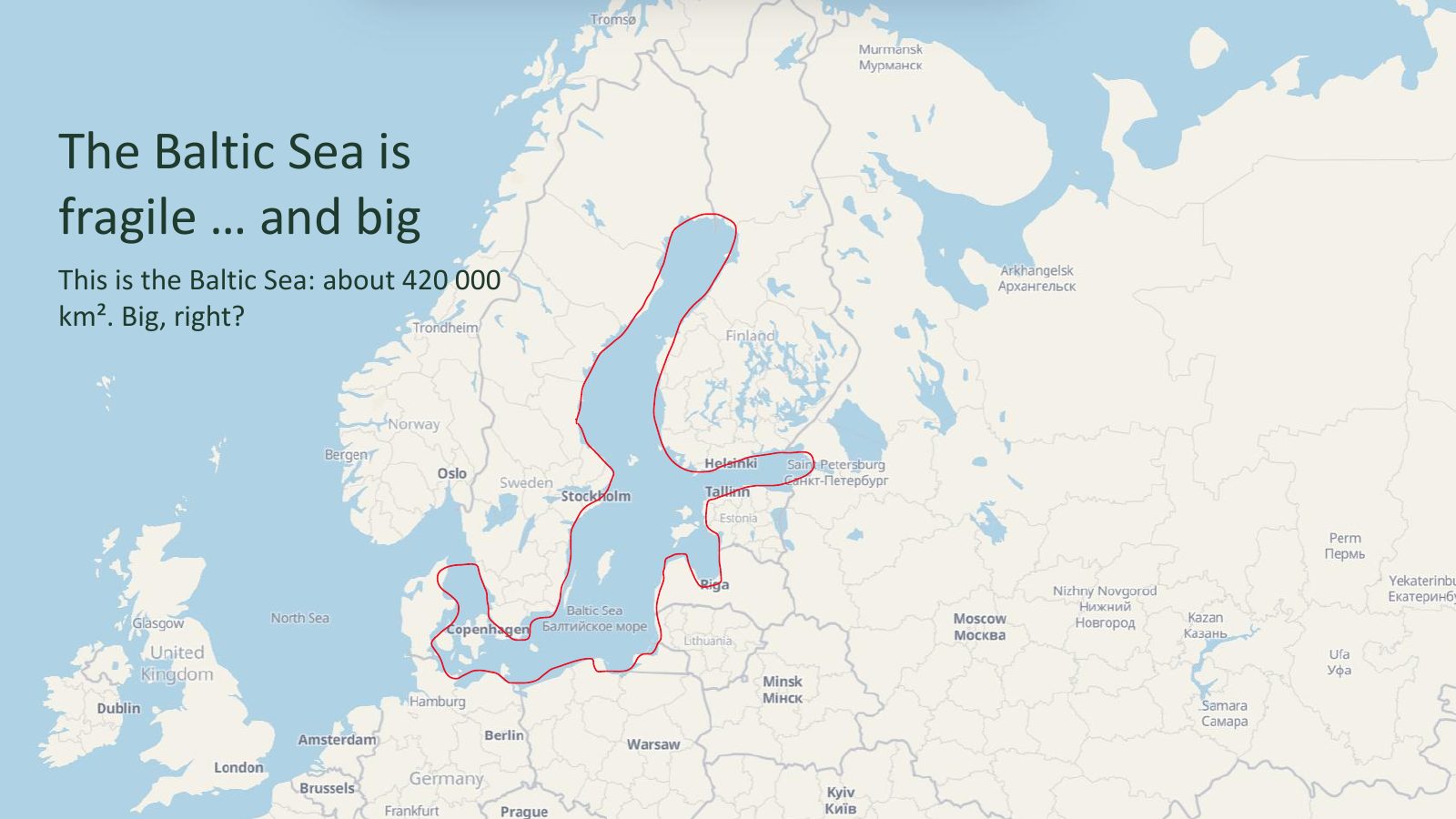
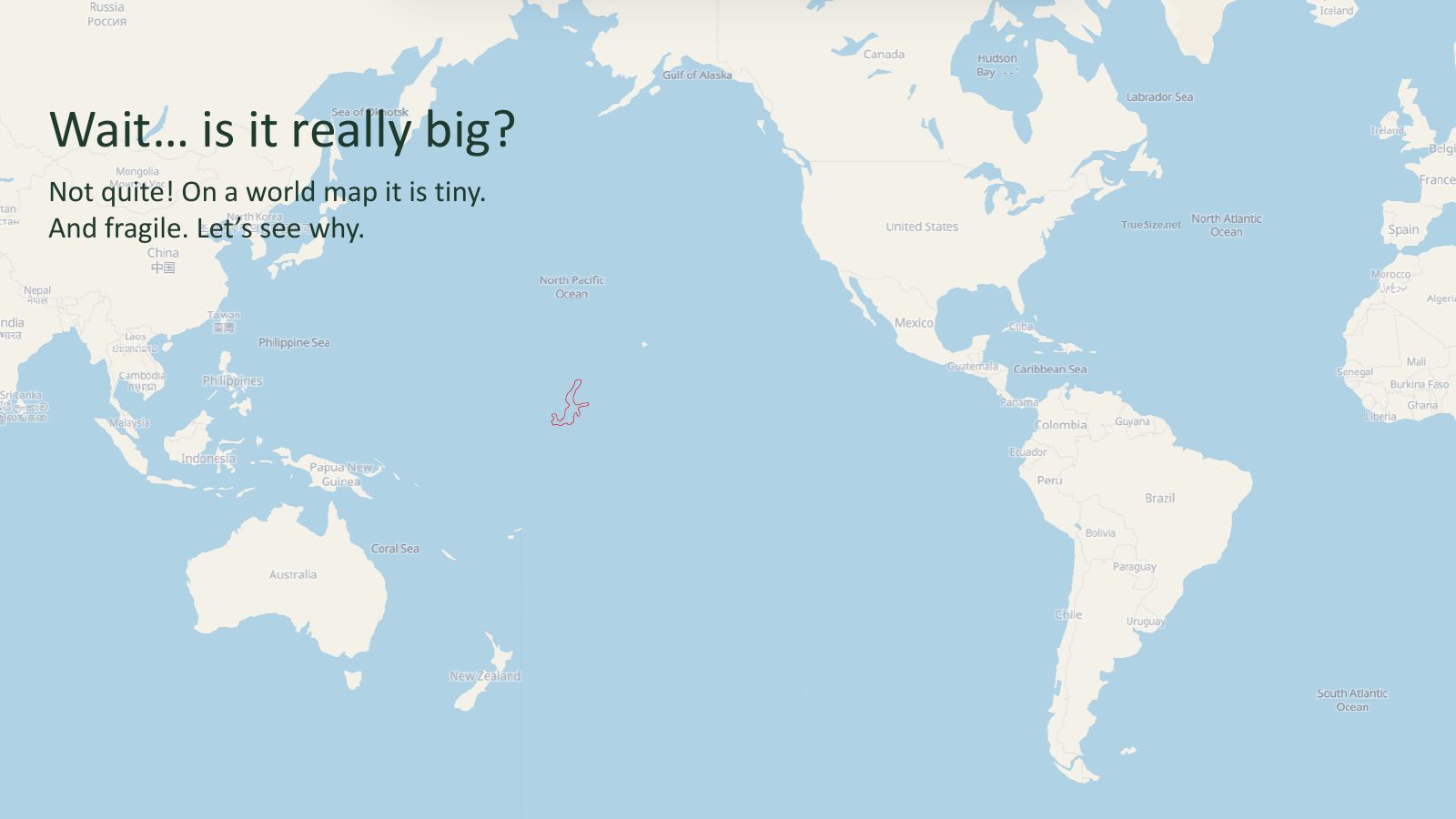
Slide 6 of 59: The Baltic Sea is fragile … and big This is the Baltic Sea: about 420 000 km². Big, right?
Slide 7 of 59: Wait… is it really big? Not quite! On a world map it is tiny. And fragile. Let’s see why.
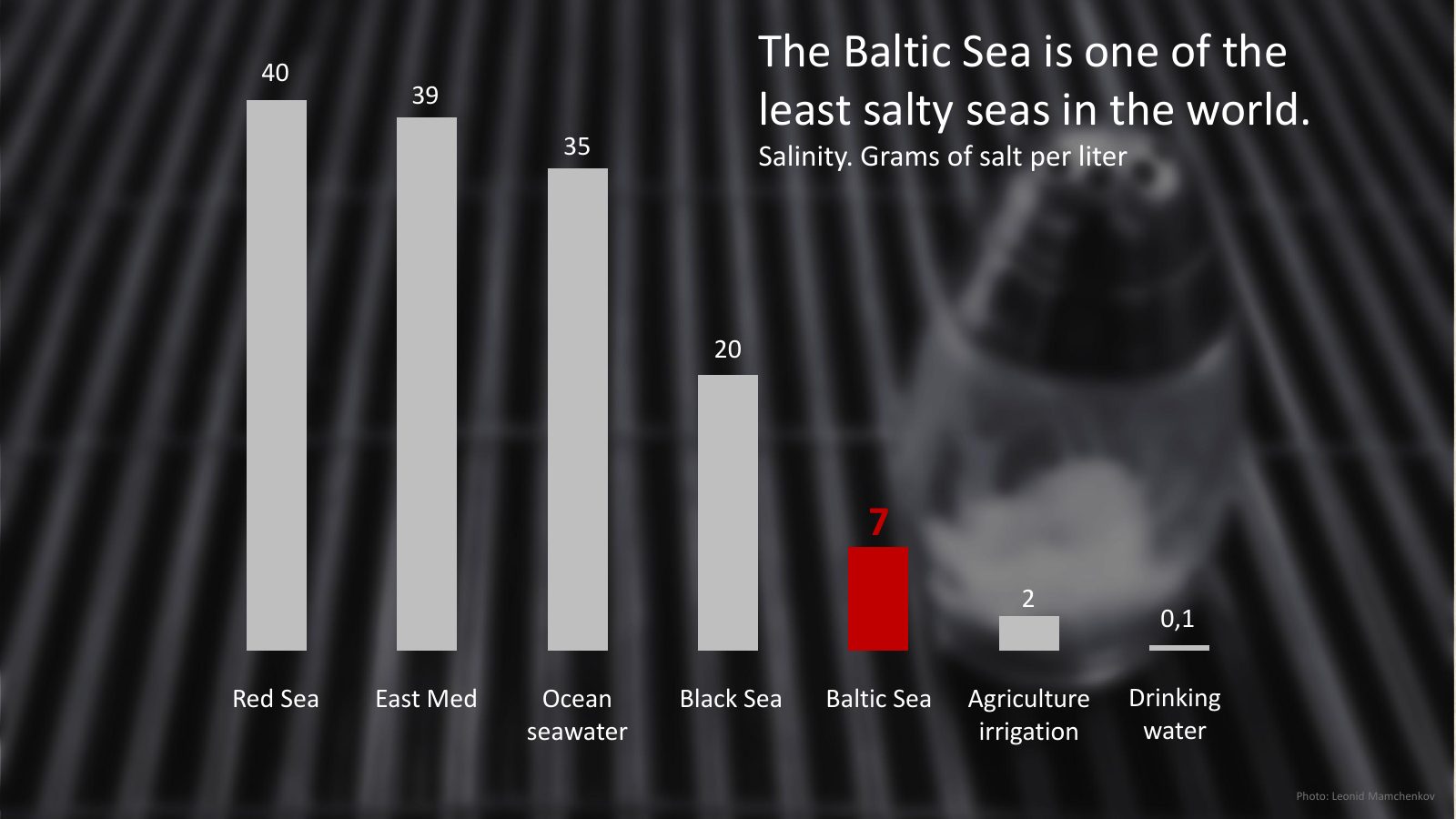
Slide 8 of 59: 40 The Baltic Sea is one of the 39 least salty seas in the world. 35 Salinity. Grams of salt per liter 20 7 2 0,1 Red Sea East Med Ocean Black Sea Baltic Sea…
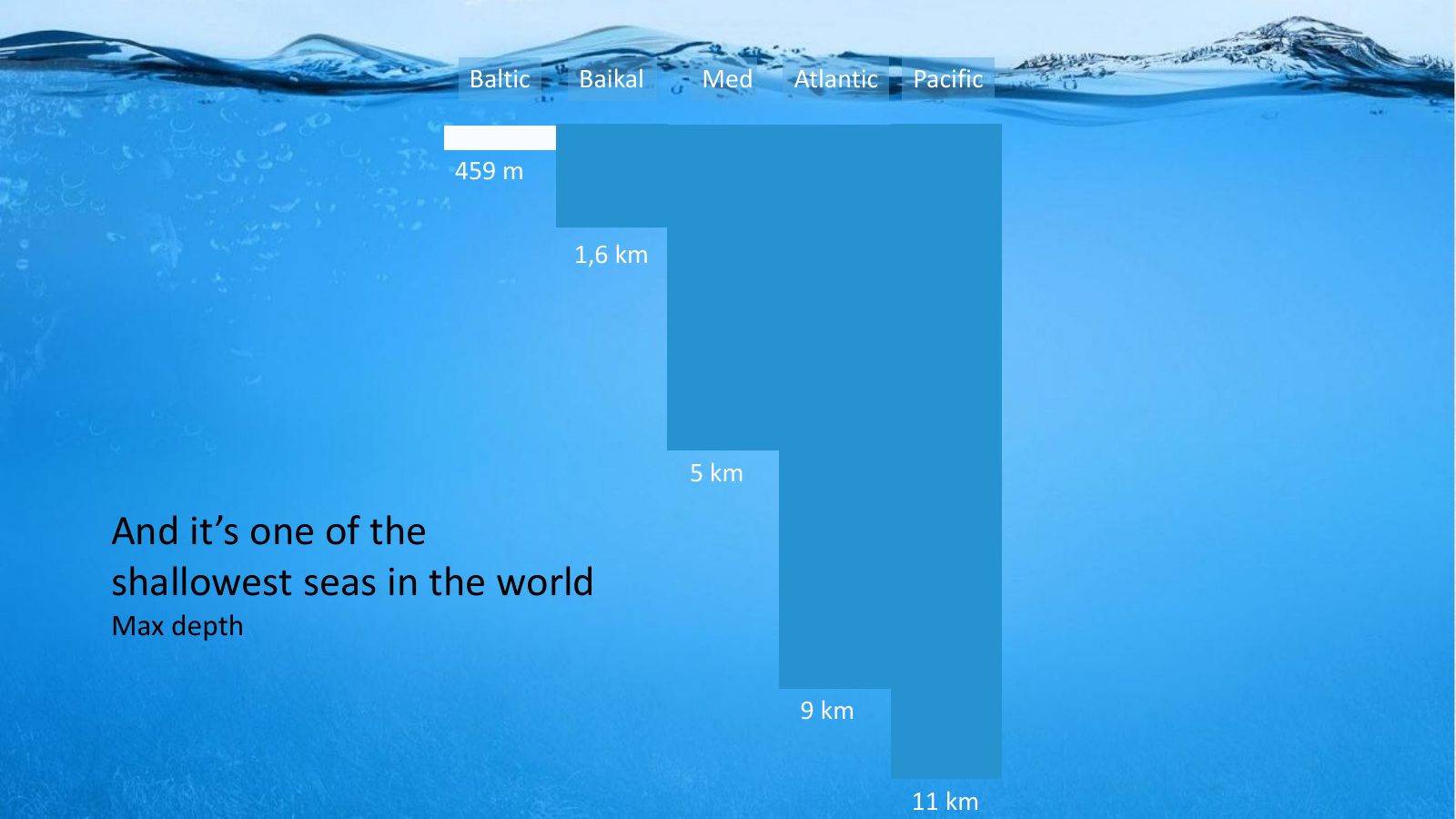
Slide 9 of 59: Baltic Baikal Med Atlantic Pacific 459 m 1,6 km 5 km And it’s one of the shallowest seas in the world Max depth 9 km 11 km
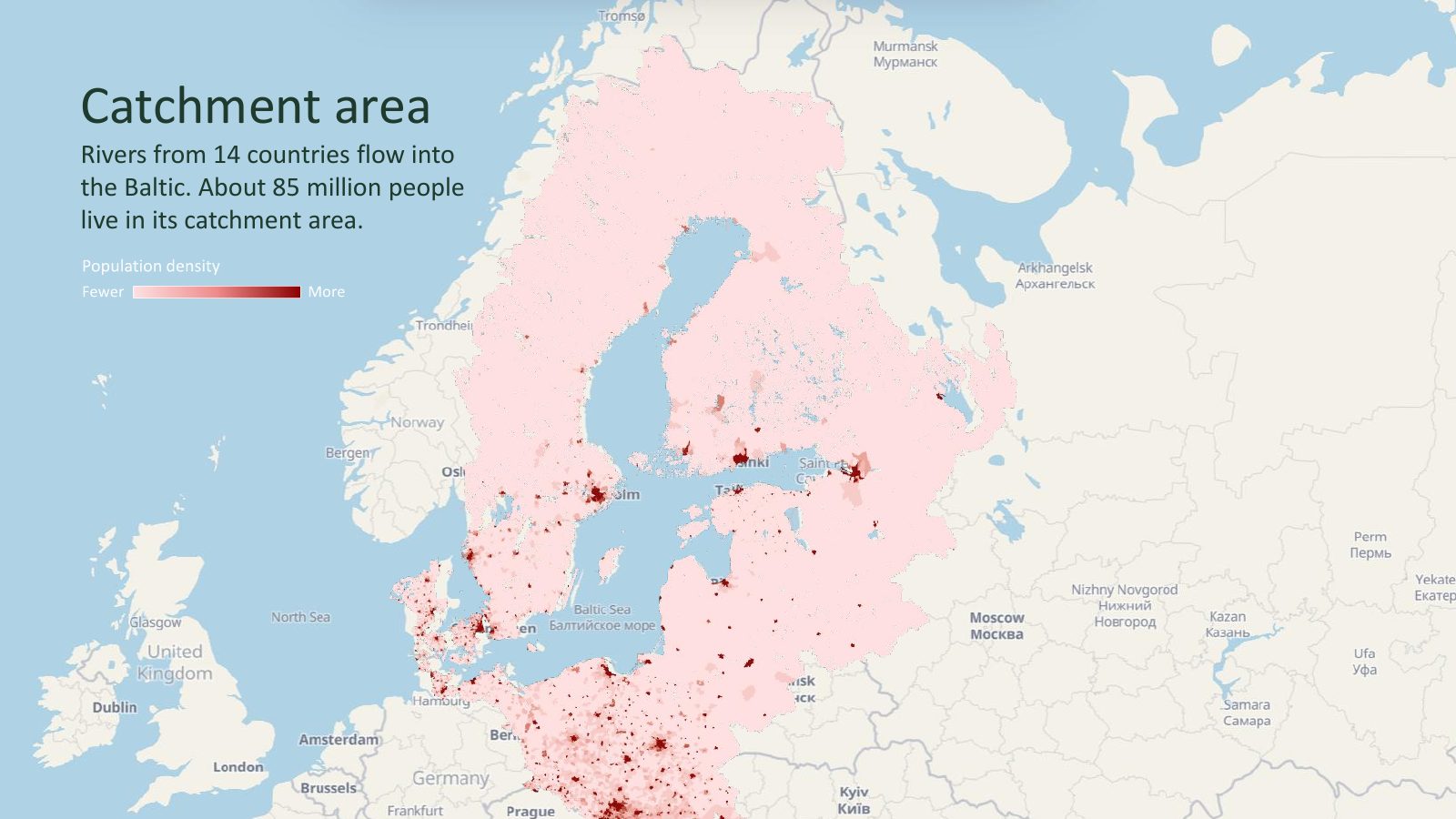
Slide 10 of 59: Catchment area Rivers from 14 countries flow into the Baltic. About 85 million people live in its catchment area.
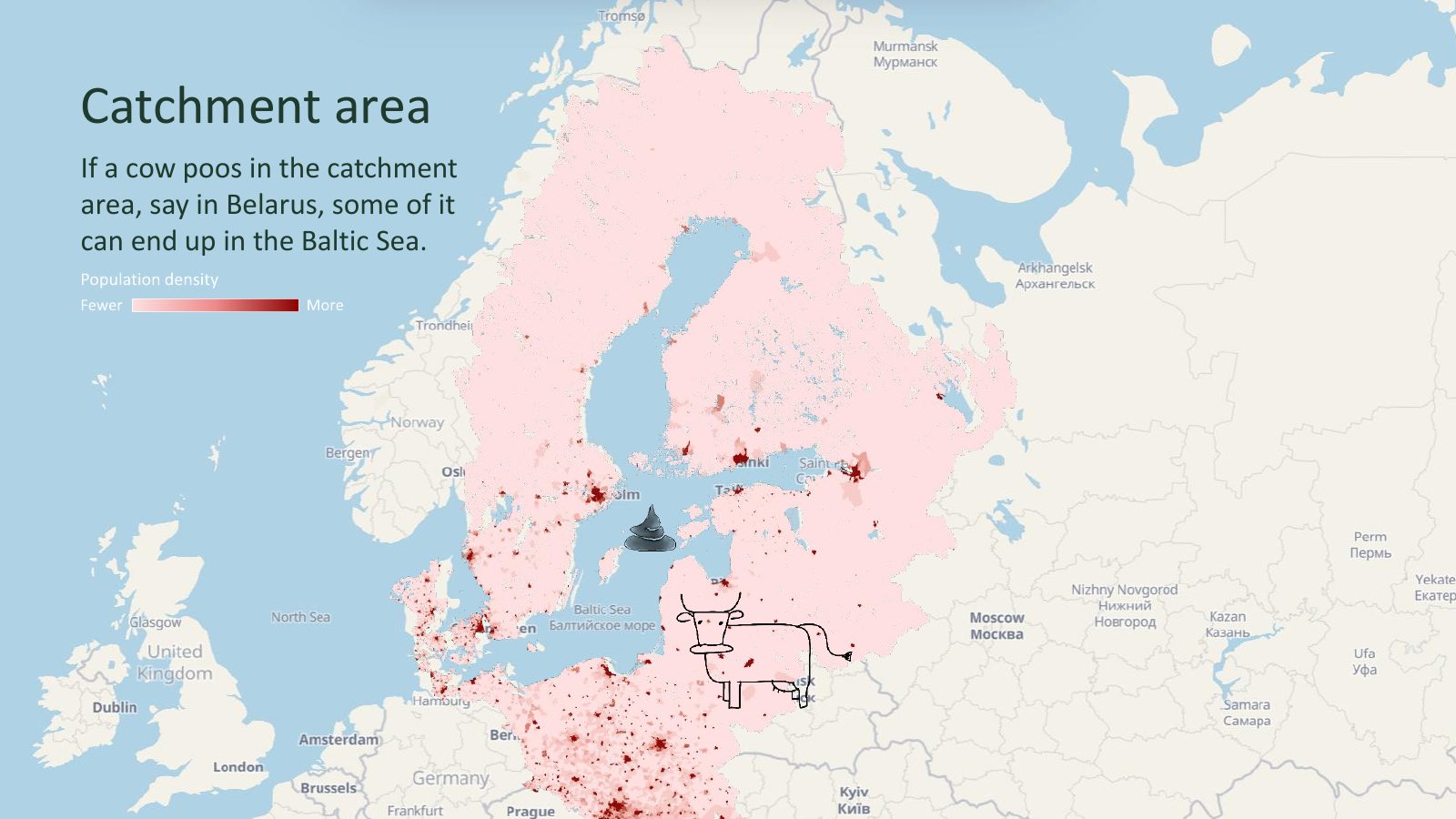
Slide 11 of 59: Catchment area If a cow poos in the catchment area, say in Belarus, some of it can end up in the Baltic Sea.
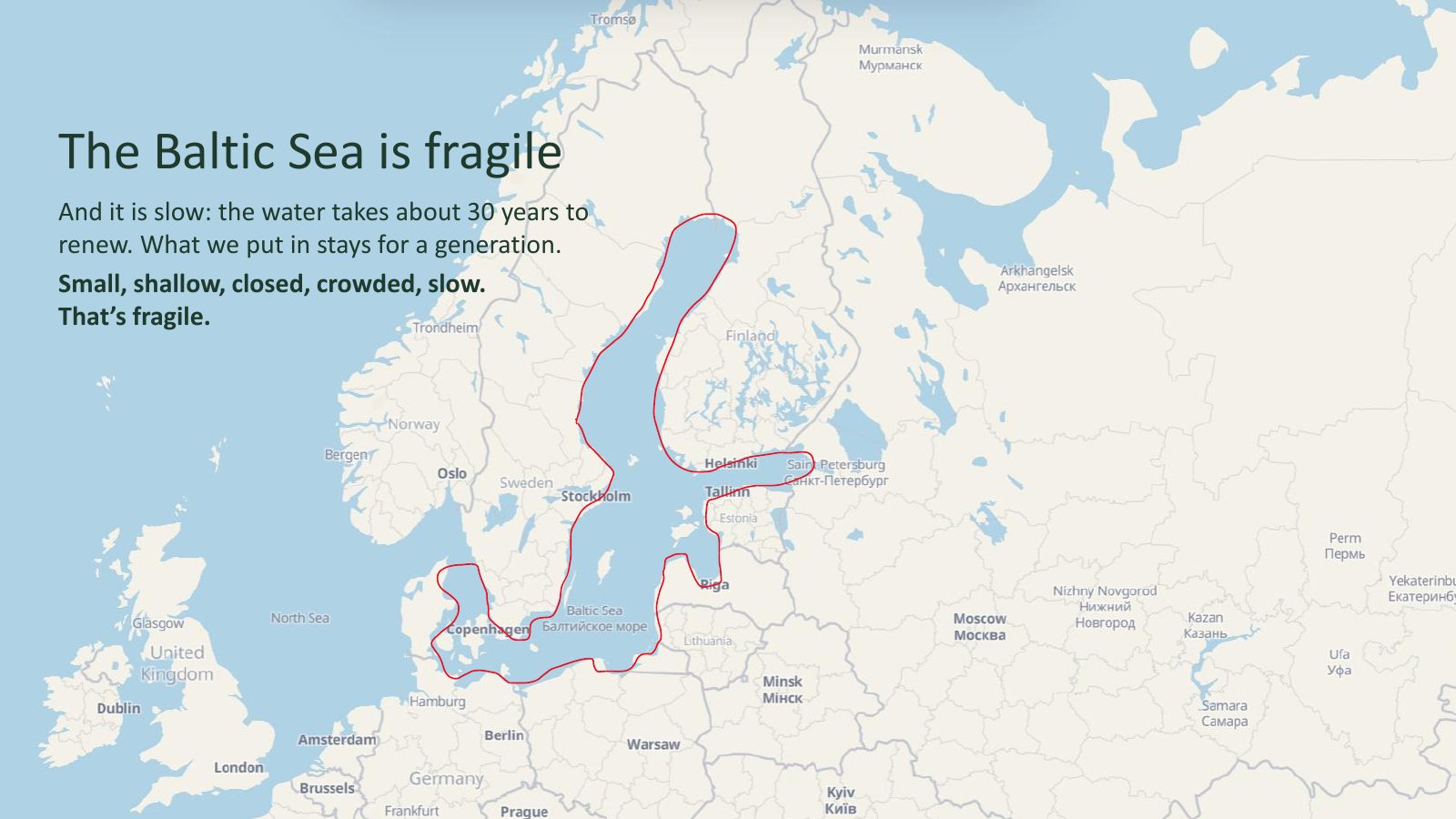
Slide 12 of 59: The Baltic Sea is fragile And it is slow: the water takes about 30 years to renew. What we put in stays for a generation. Small, shallow, closed, crowded, sl…
Slide 13 of 59: The life of Meri’s family Now, back to Meri. Meri’s ancestors had a dramatic and miserable life. Manuel
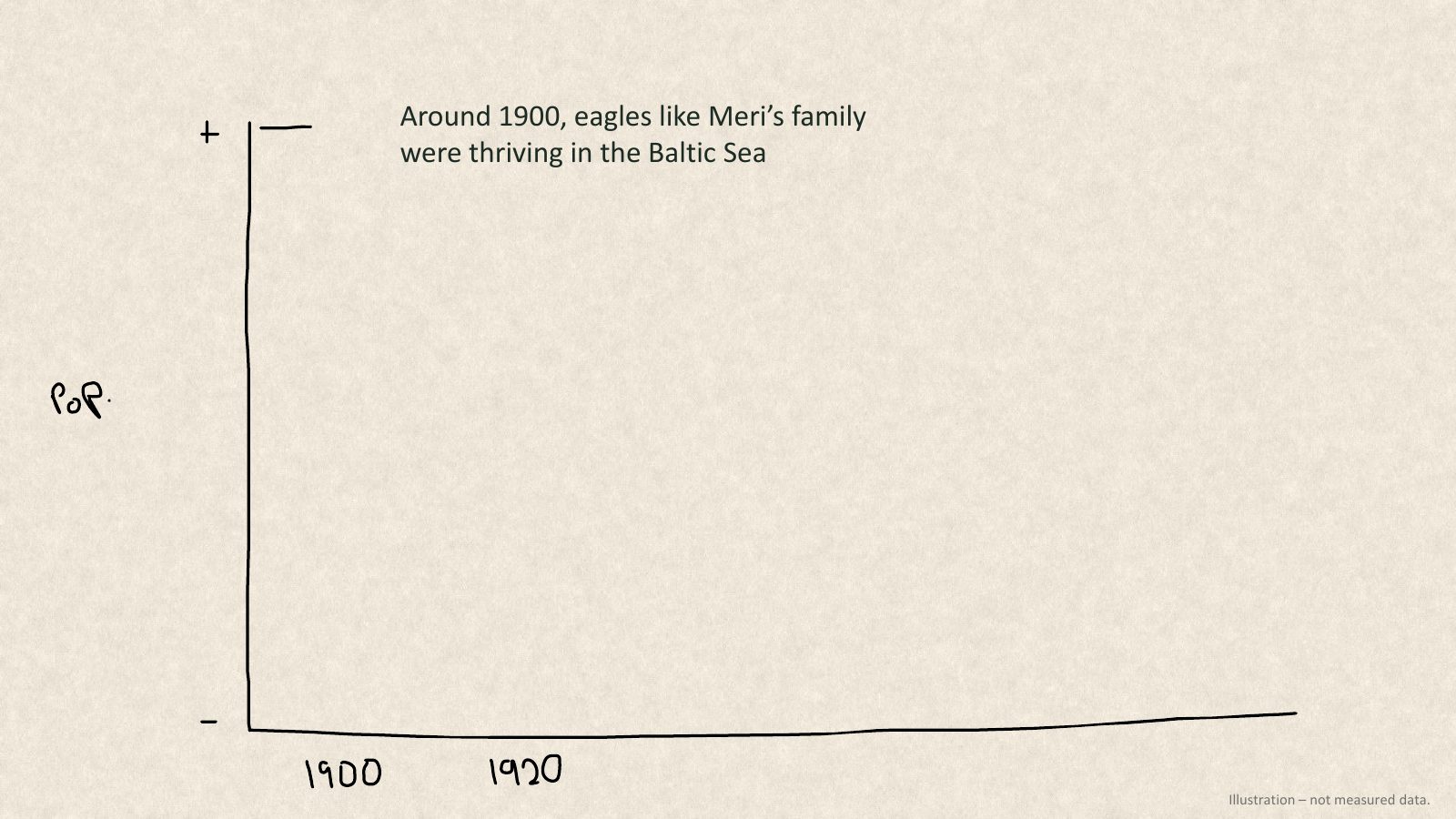
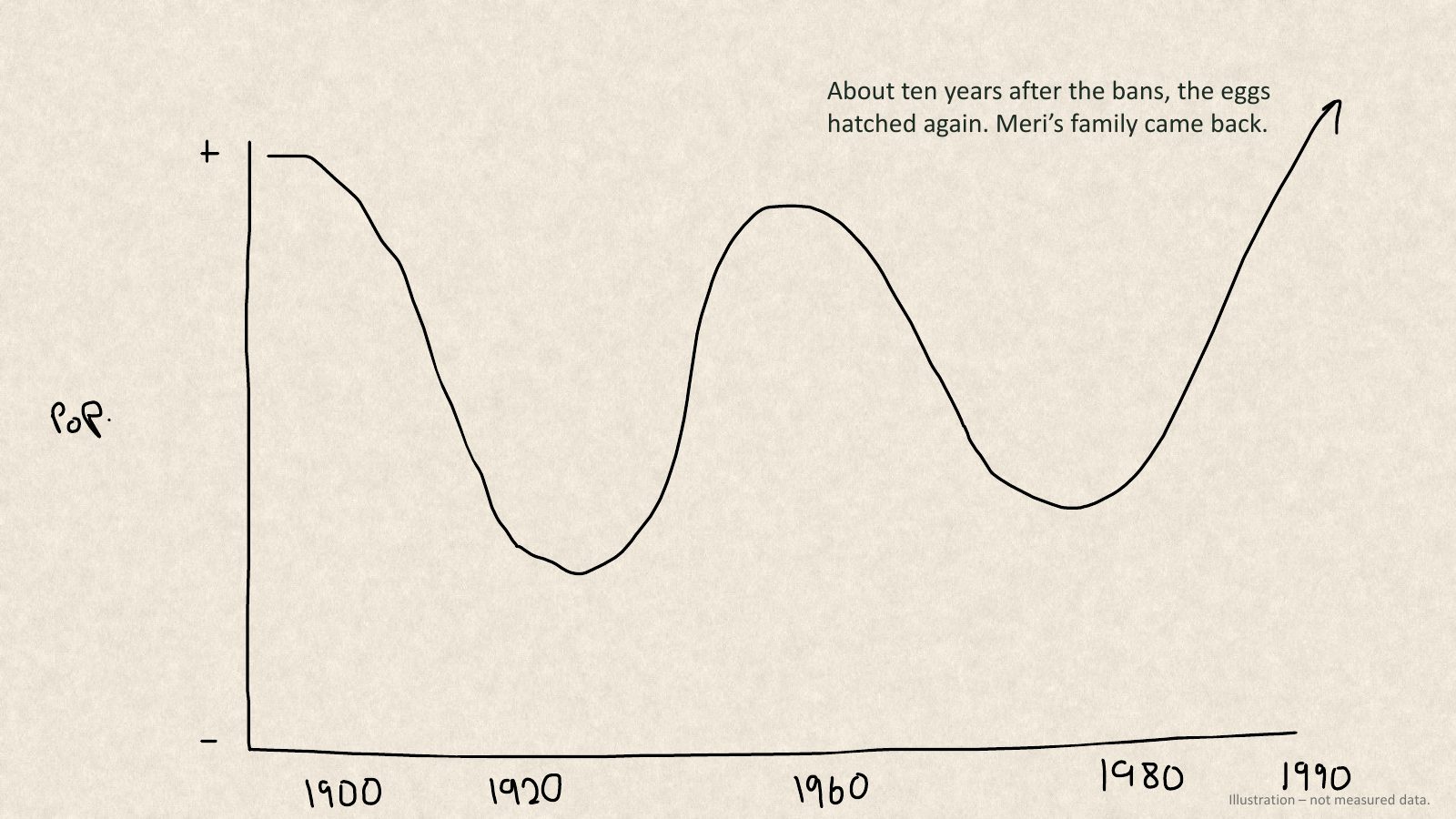
Slide 14 of 59: Around 1900, eagles like Meri’s family were thriving in the Baltic Sea Illustration – not measured data.
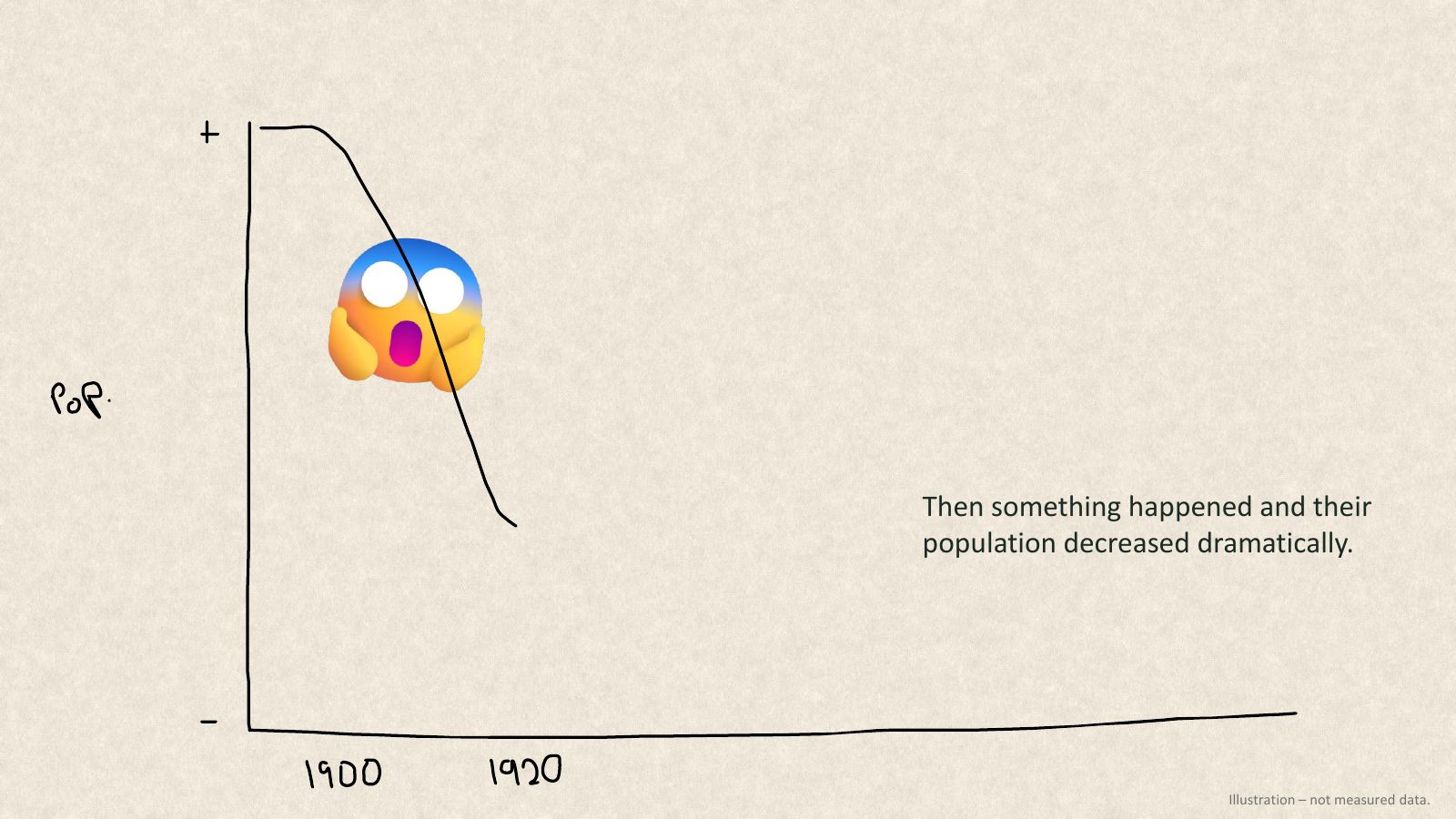
Slide 15 of 59: Then something happened and their population decreased dramatically. Illustration – not measured data.
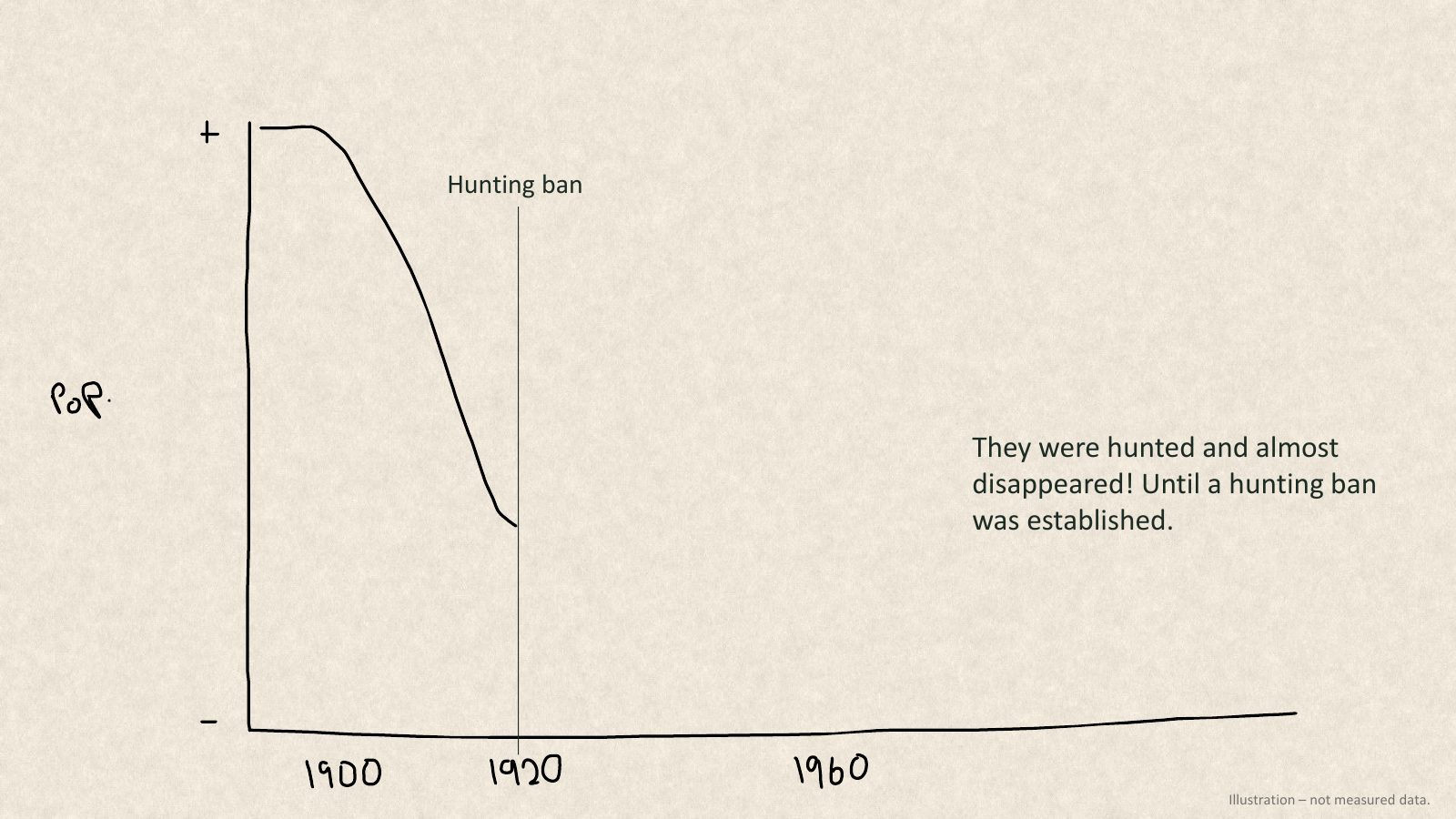
Slide 16 of 59: Hunting ban They were hunted and almost disappeared! Until a hunting ban was established. Illustration – not measured data.
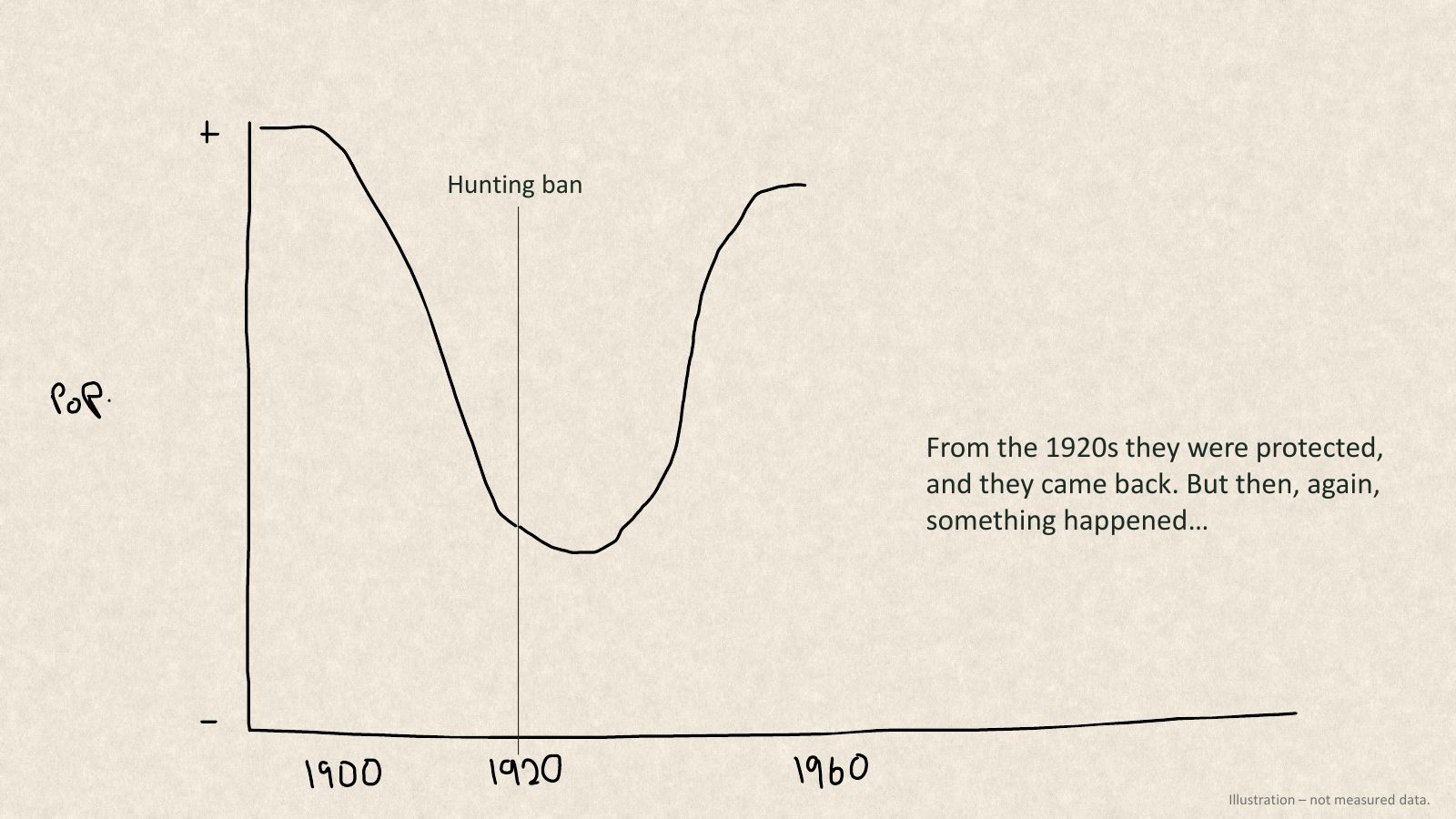
Slide 17 of 59: Hunting ban From the 1920s they were protected, and they came back. But then, again, something happened… Illustration – not measured data.
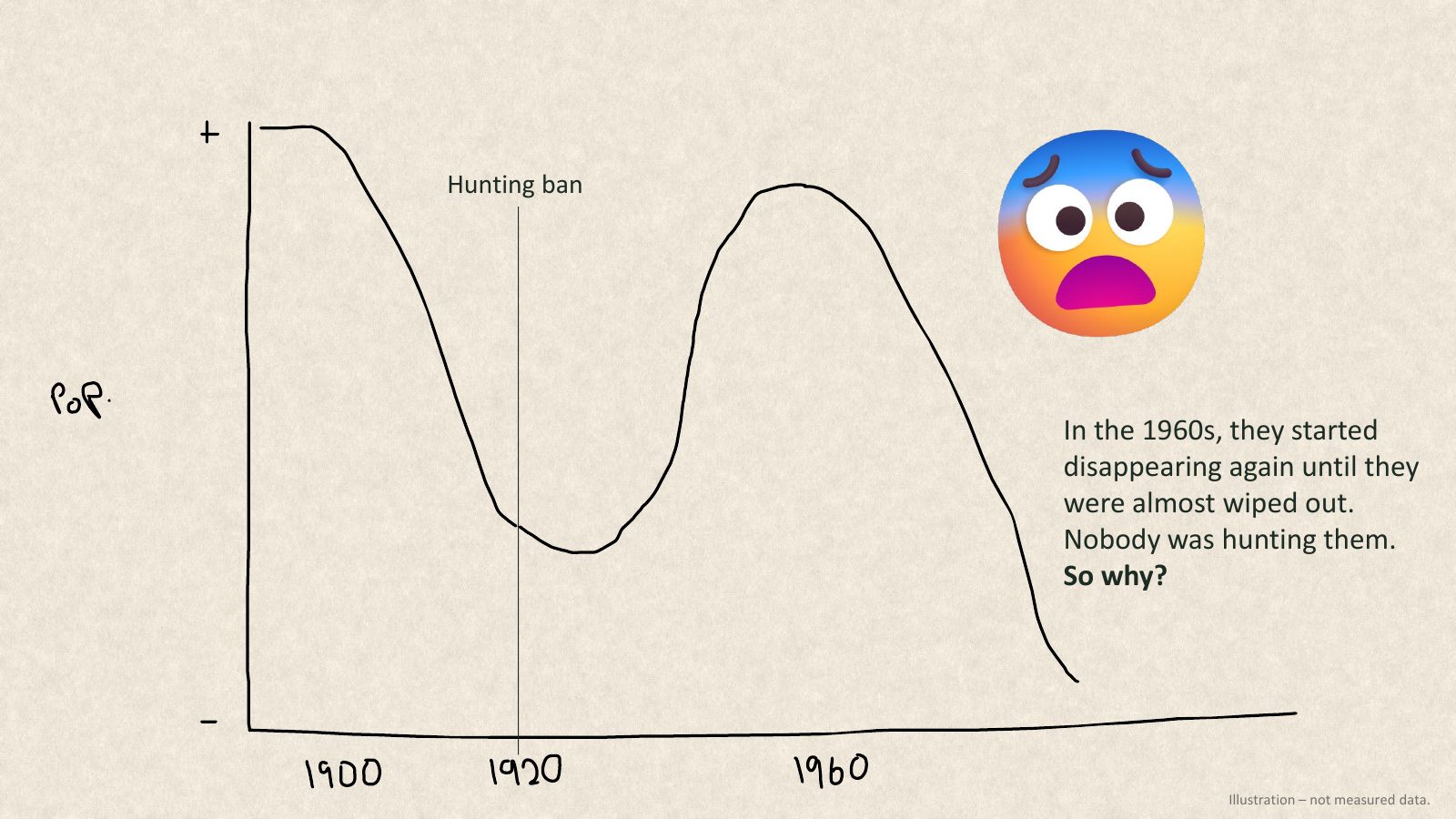
Slide 18 of 59: Hunting ban In the 1960s, they started disappearing again until they were almost wiped out. Nobody was hunting them. So why? Illustration – not measured data.
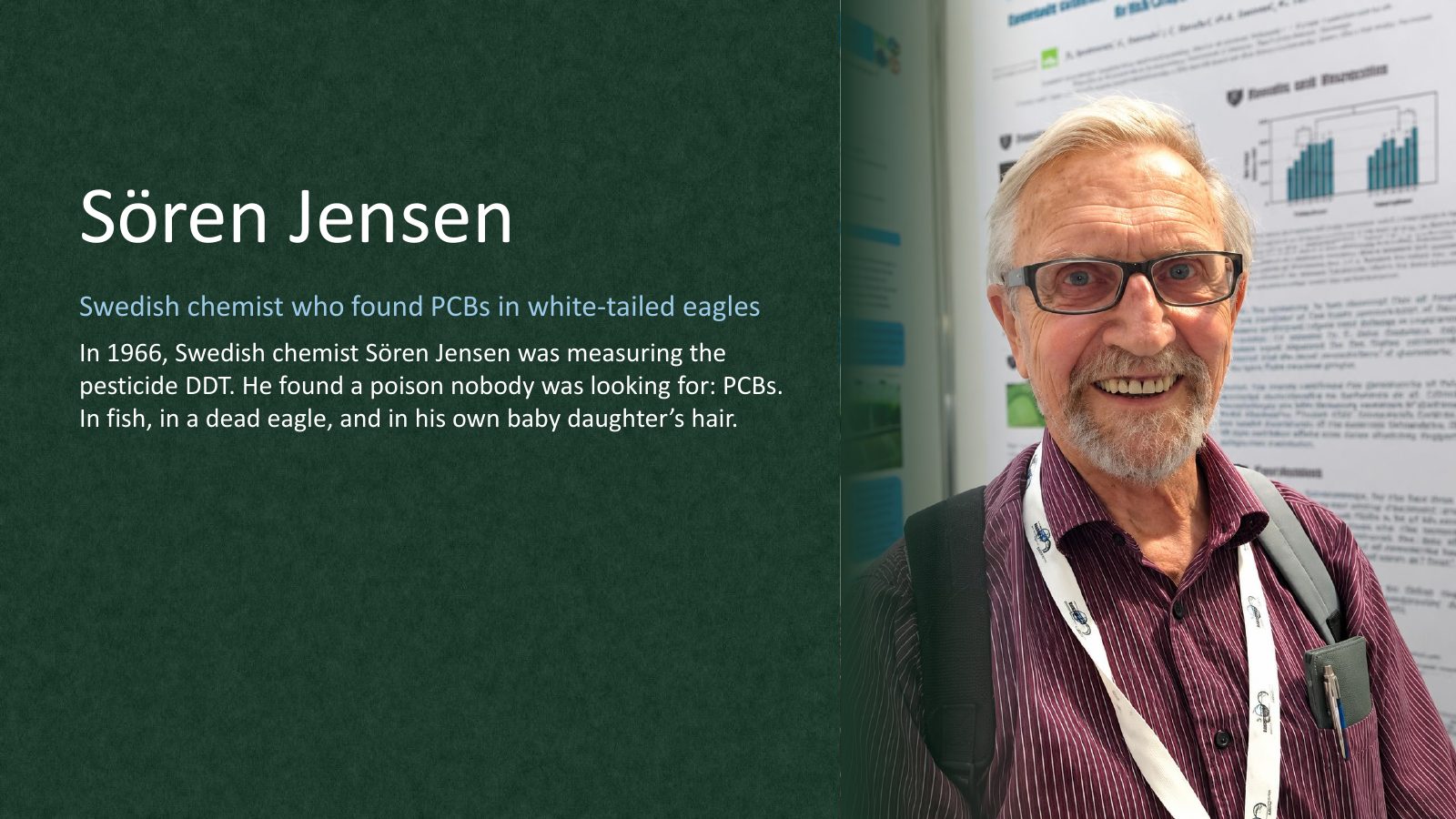
Slide 19 of 59: Sören Jensen Swedish chemist who found PCBs in white-tailed eagles In 1966, Swedish chemist Sören Jensen was measuring the pesticide DDT. He found a poison n…
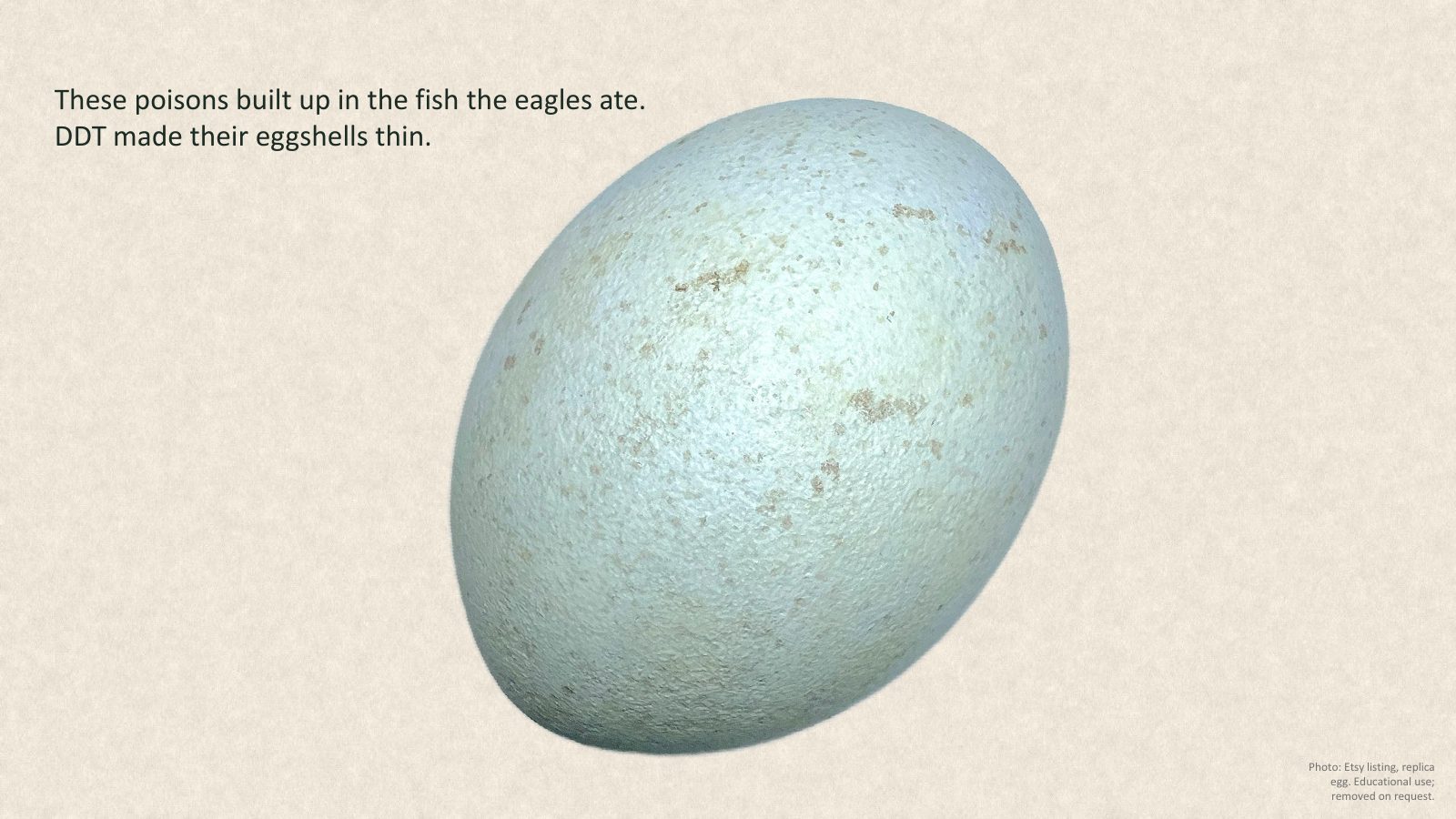
Slide 20 of 59: These poisons built up in the fish the eagles ate. DDT made their eggshells thin. Photo: Etsy listing, replica egg. Educational use; removed on request.
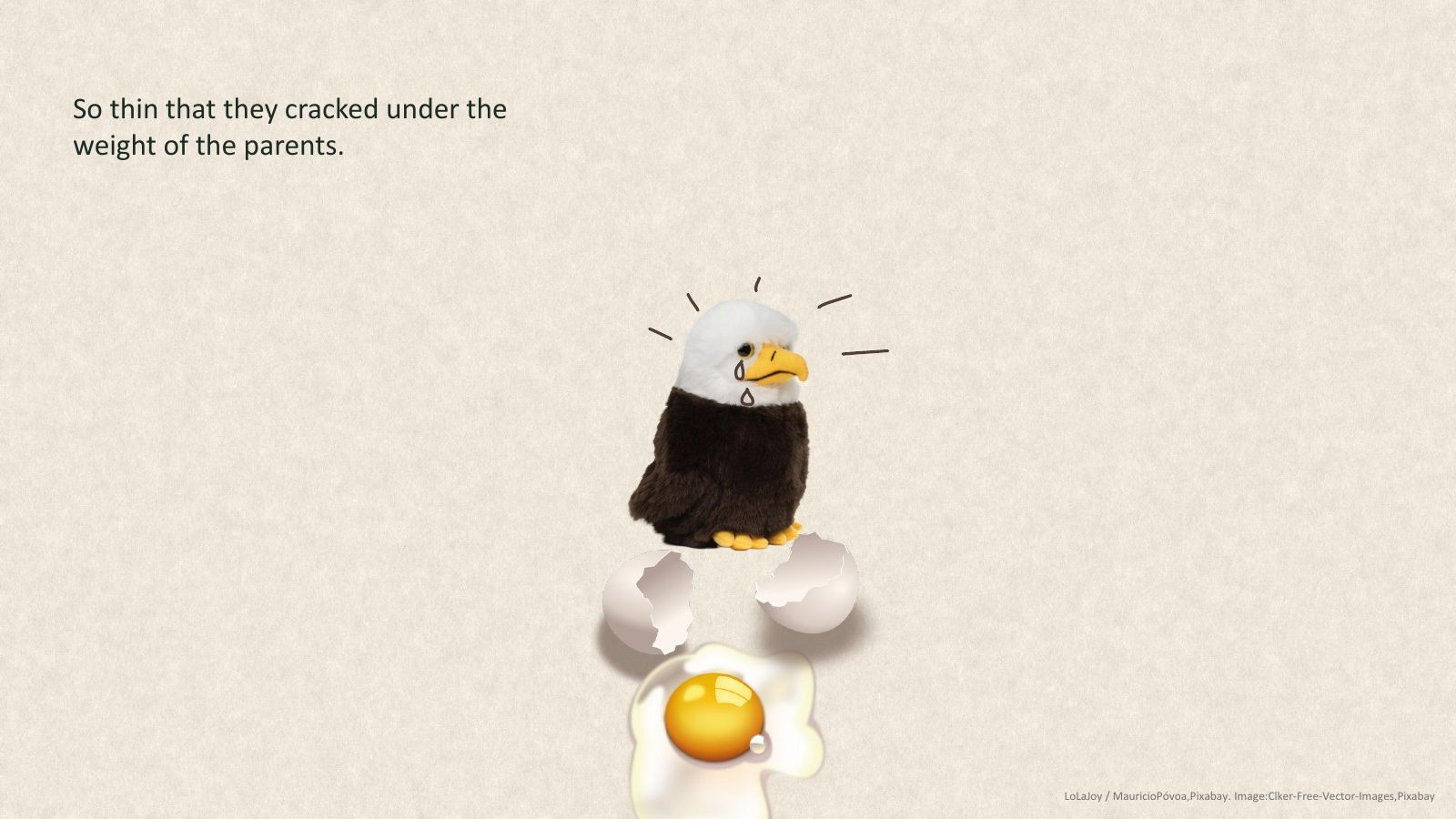
Slide 21 of 59: So thin that they cracked under the weight of the parents. LoLaJoy / MauricioPóvoa,Pixabay. Image:Clker-Free-Vector-Images,Pixabay
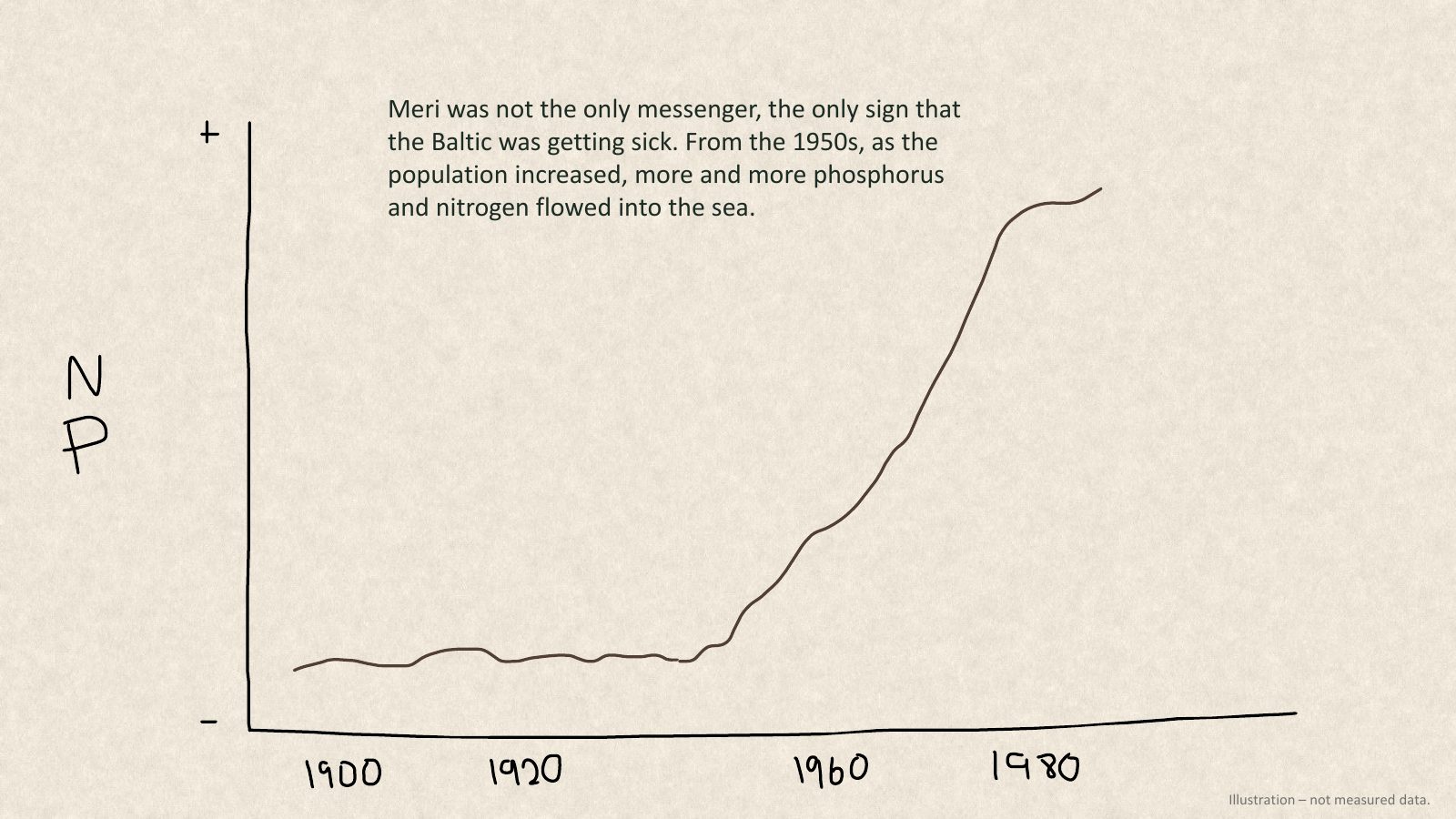
Slide 22 of 59: Meri was not the only messenger, the only sign that the Baltic was getting sick. From the 1950s, as the population increased, more and more phosphorus and ni…
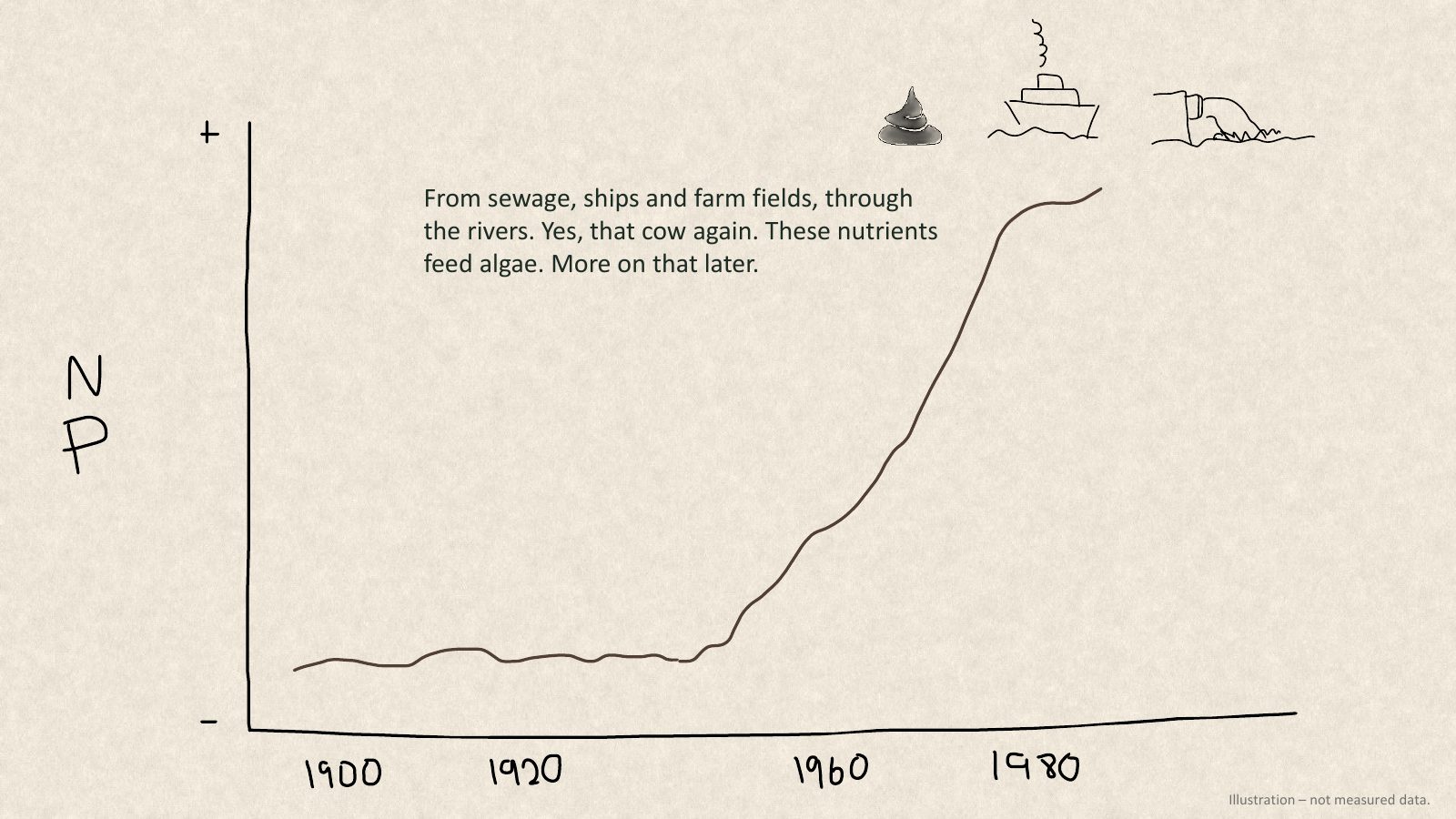
Slide 23 of 59: From sewage, ships and farm fields, through the rivers. Yes, that cow again. These nutrients feed algae. More on that later. Illustration – not measured data.
Slide 24 of 59: No country can fix this ALONE The poisons and nutrients came from all around the sea. No country could stop them alone.
Slide 25 of 59: Something extraordinary happened in 1974 In the middle of the Cold War, all the countries around the Baltic sat at the same table. Katja
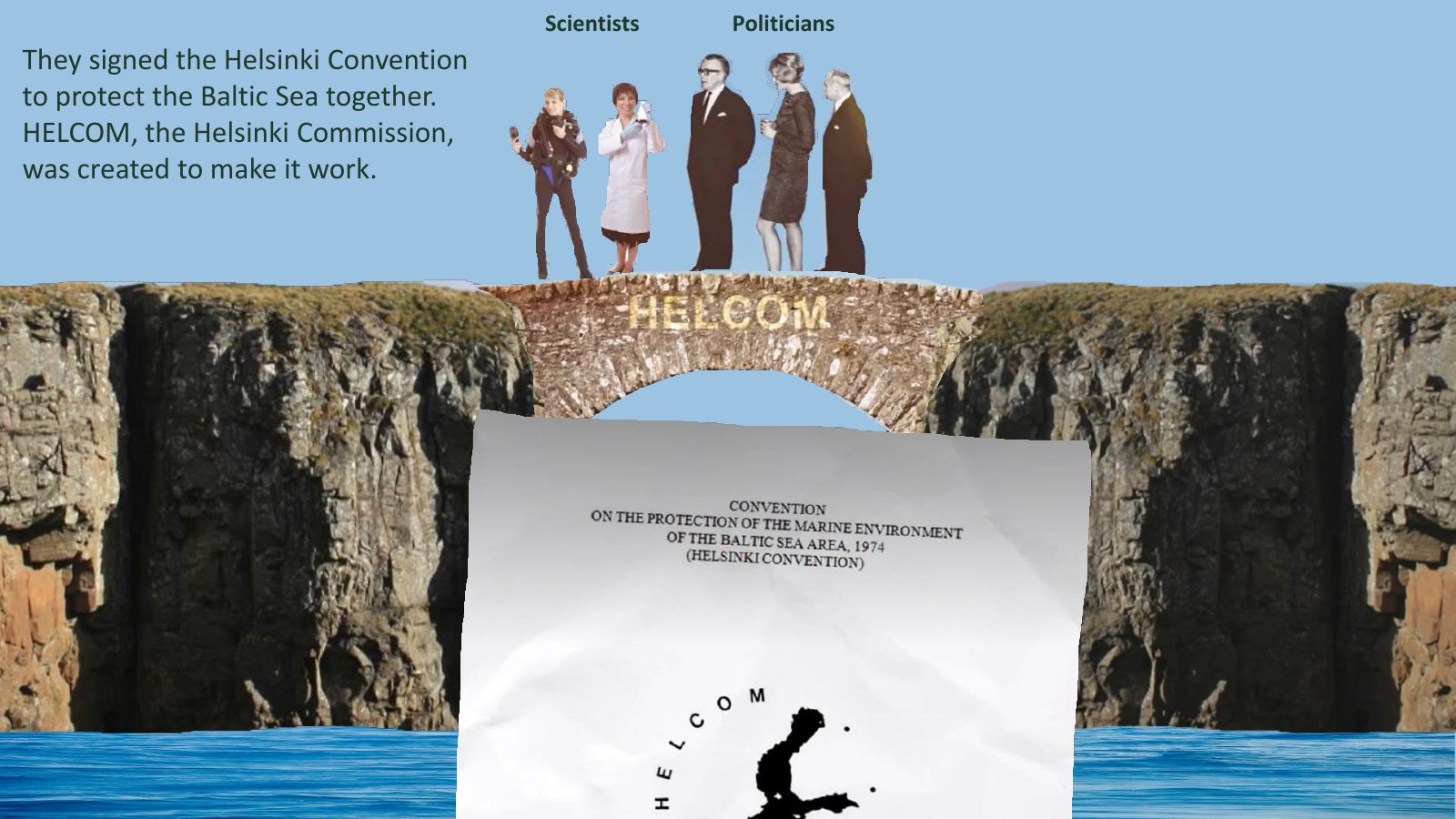
Slide 26 of 59: Scientists Politicians They signed the Helsinki Convention to protect the Baltic Sea together. HELCOM, the Helsinki Commission, was created to make it work.
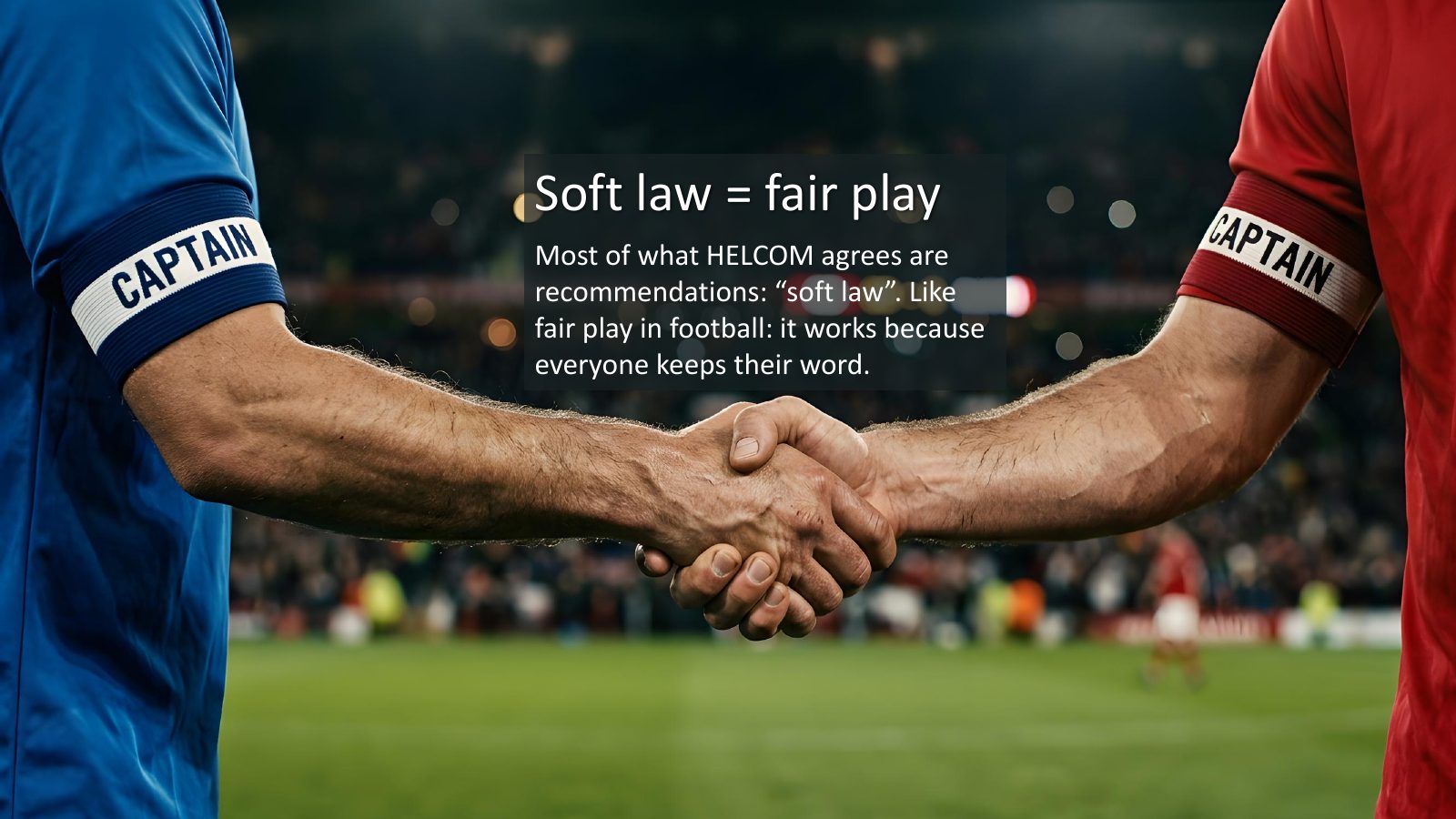
Slide 27 of 59: Soft law = fair play Most of what HELCOM agrees are recommendations: “soft law”. Like fair play in football: it works because everyone keeps their word.
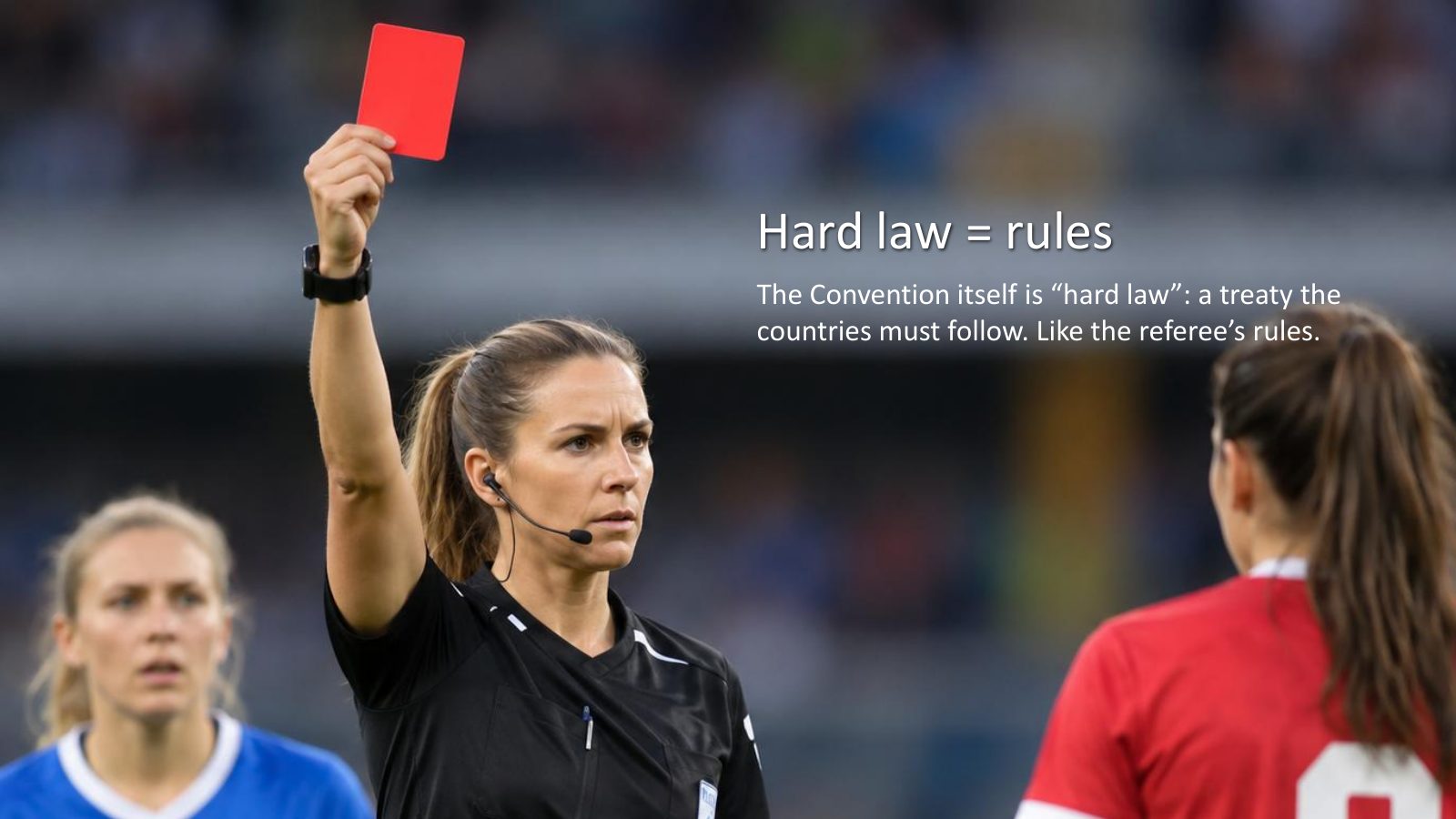
Slide 28 of 59: Hard law = rules The Convention itself is “hard law”: a treaty the countries must follow. Like the referee’s rules.
Slide 29 of 59: About ten years after the bans, the eggs hatched again. Meri’s family came back. Illustration – not measured data.
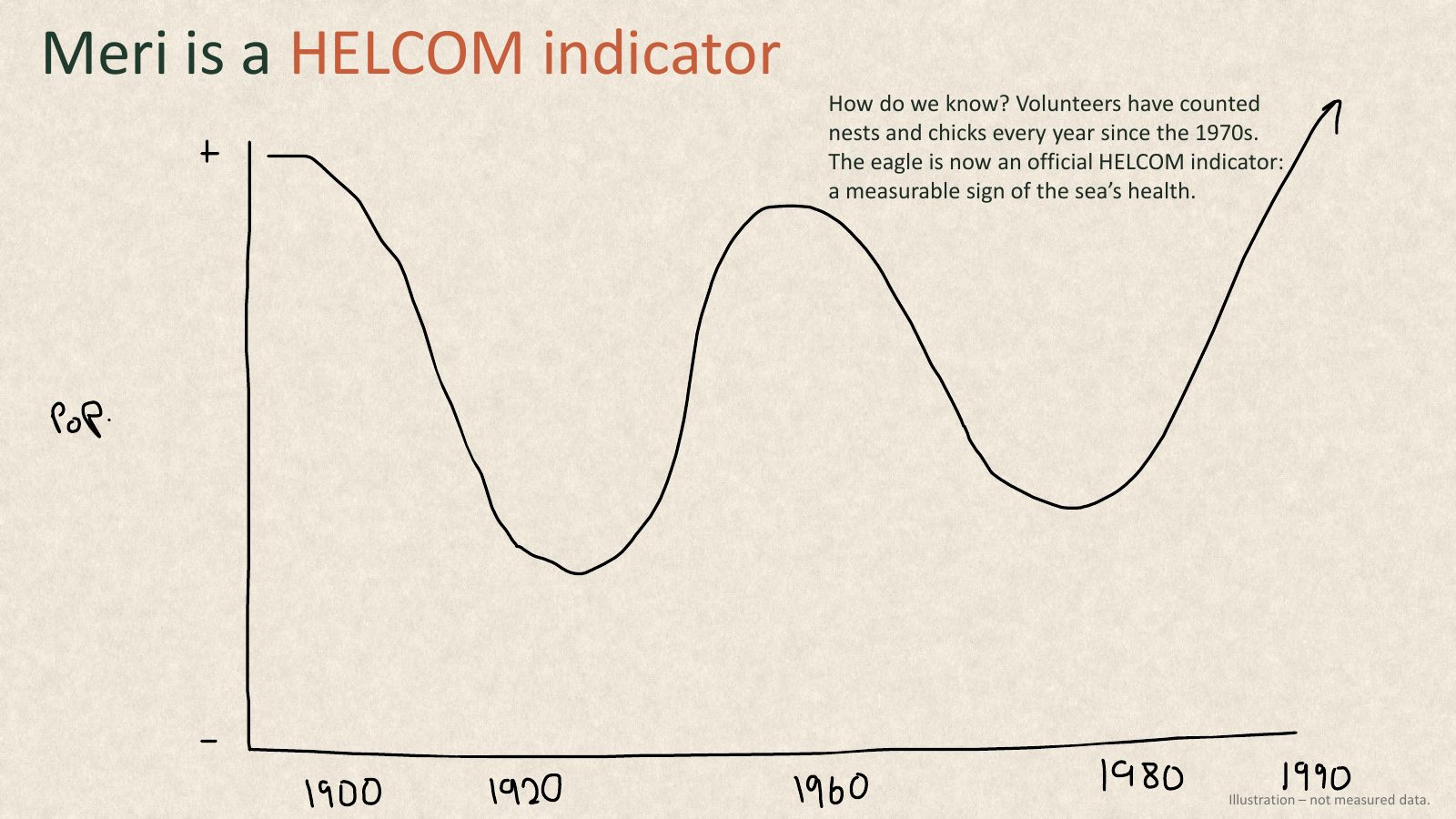
Slide 30 of 59: Meri is a HELCOM indicator How do we know? Volunteers have counted nests and chicks every year since the 1970s. The eagle is now an official HELCOM indicator…
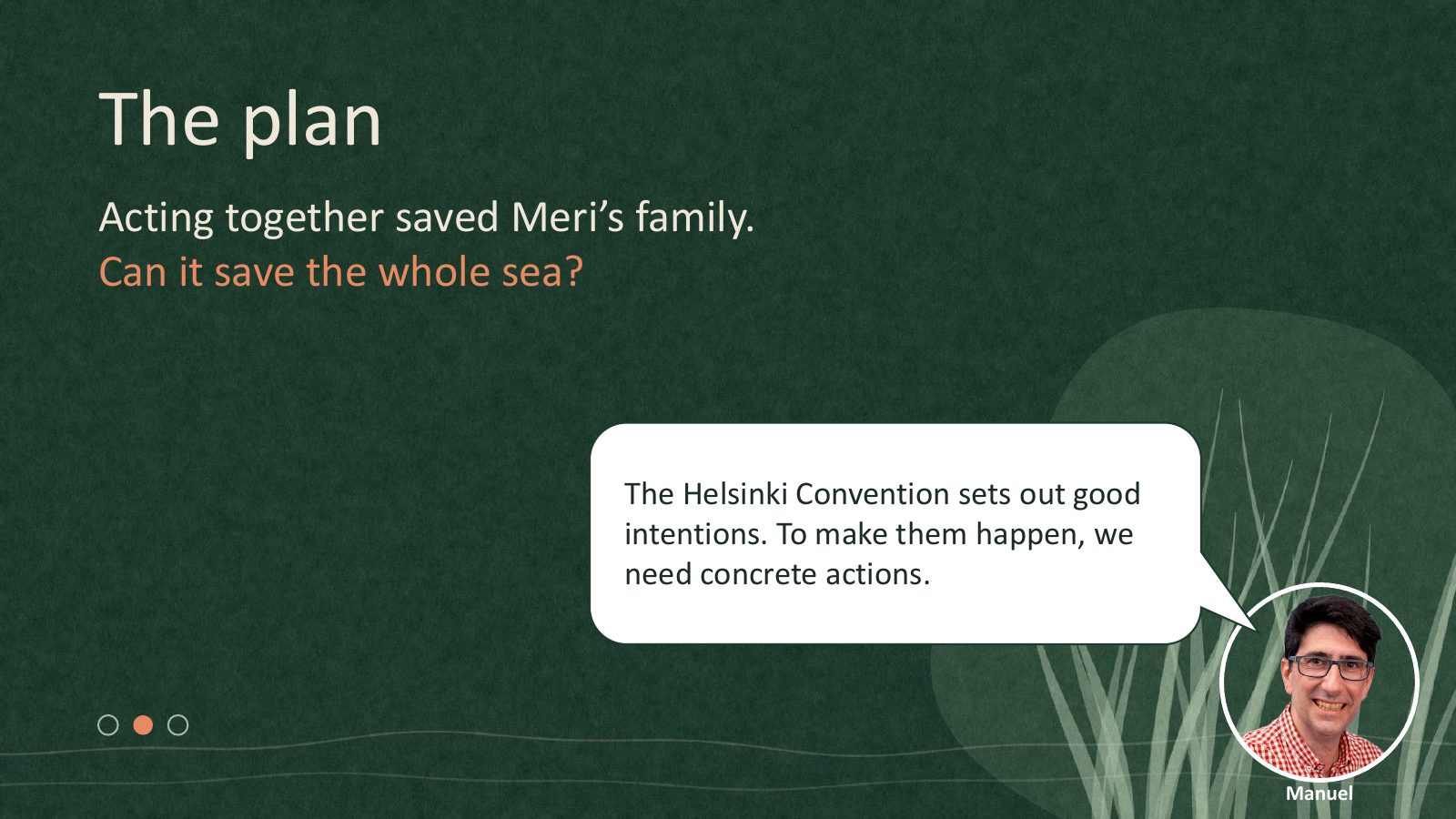
Slide 31 of 59: The plan Acting together saved Meri’s family. Can it save the whole sea? The Helsinki Convention sets out good intentions. To make them happen, we need concr…
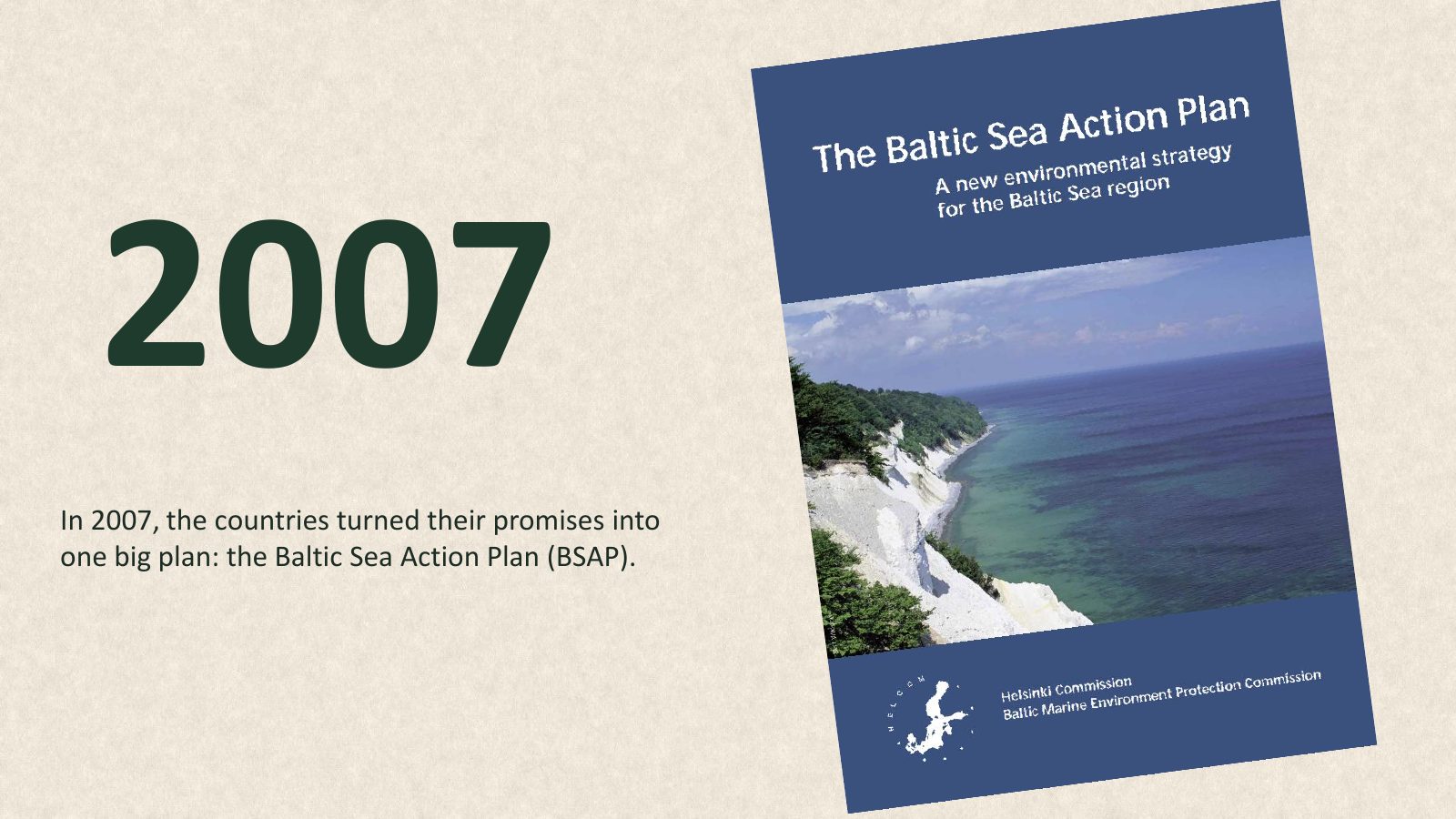
Slide 32 of 59: 2007 In 2007, the countries turned their promises into one big plan: the Baltic Sea Action Plan (BSAP).
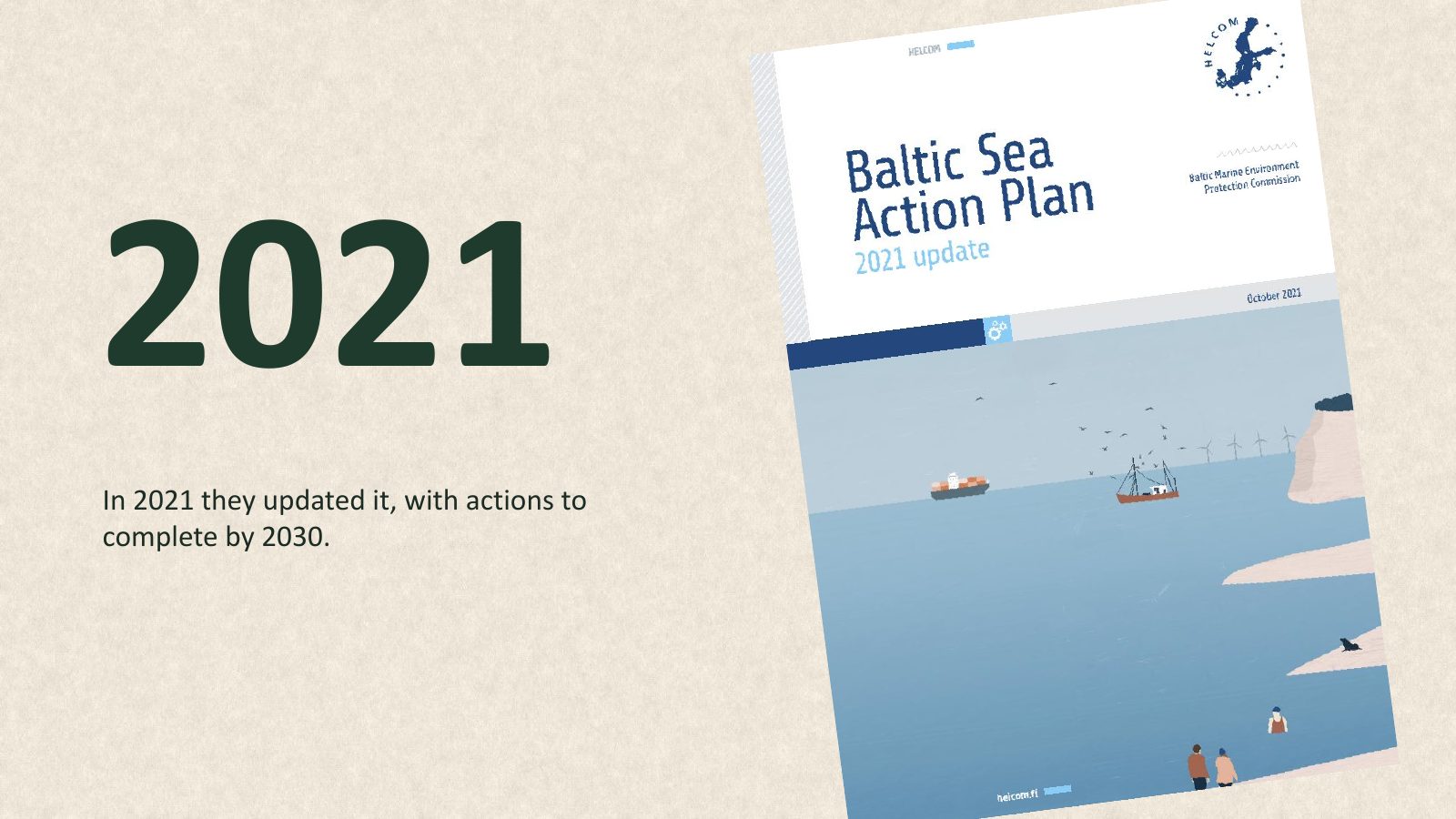
Slide 33 of 59: 2021 In 2021 they updated it, with actions to complete by 2030.
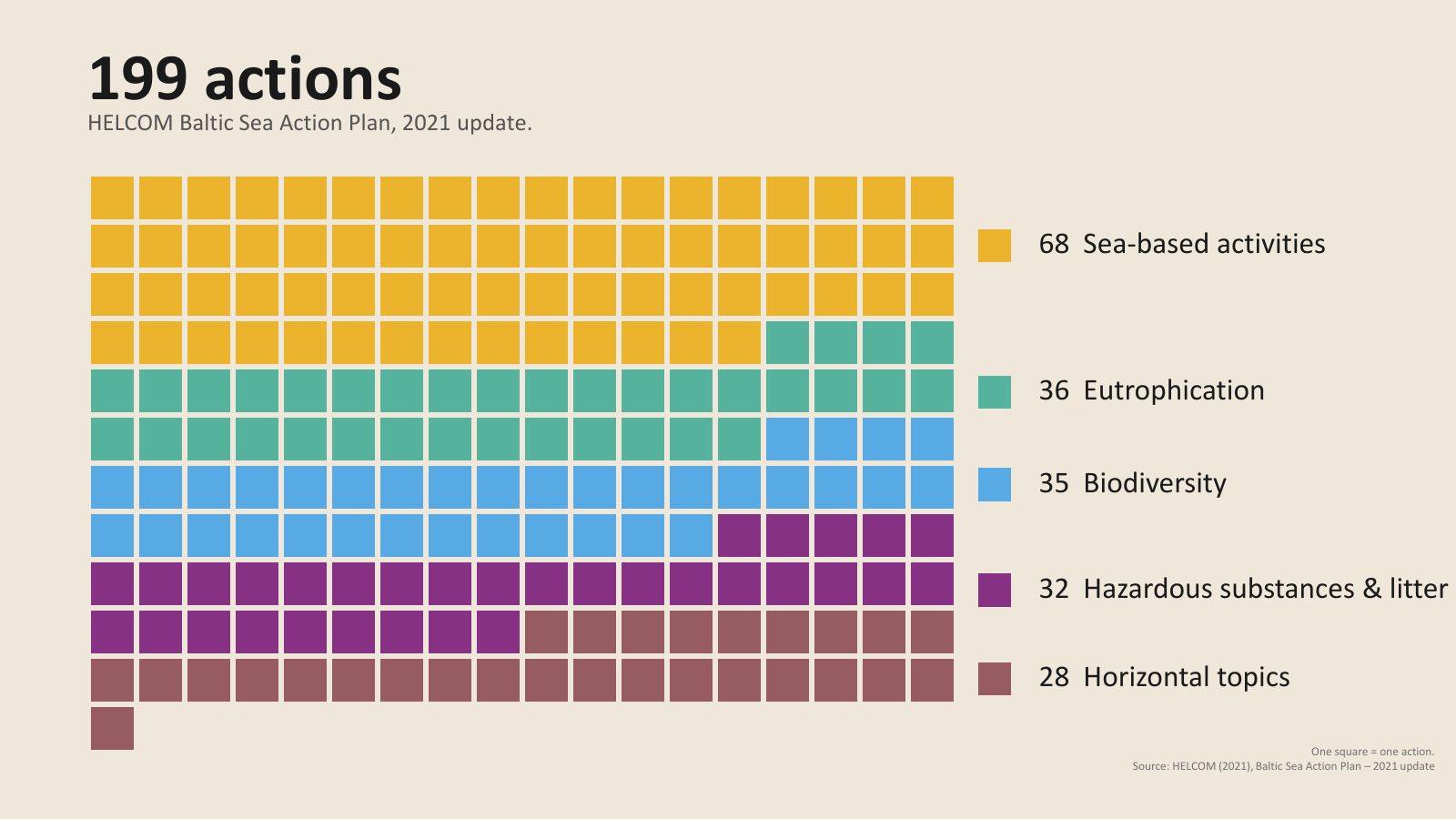
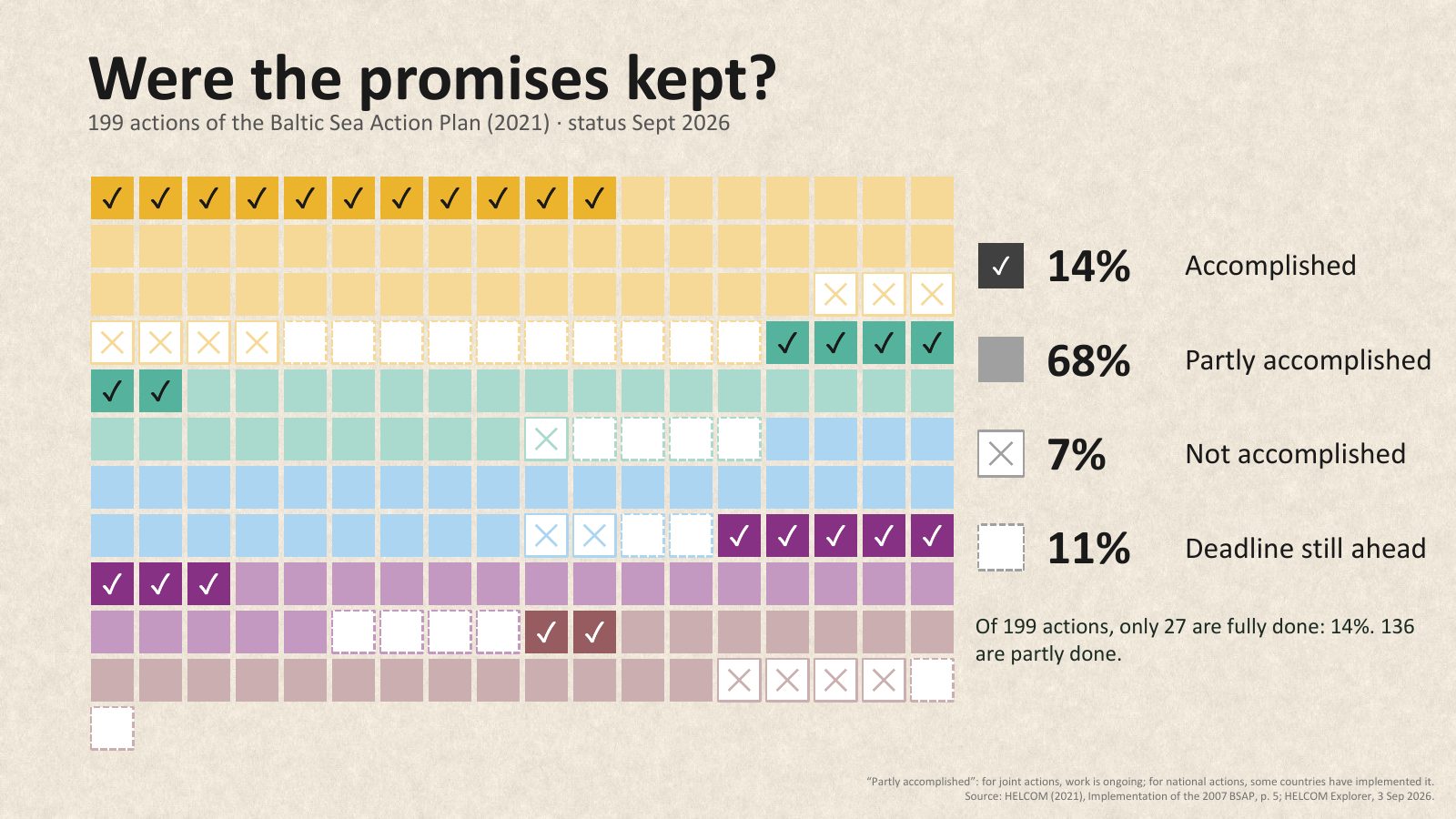
Slide 34 of 59: 199 actions HELCOM Baltic Sea Action Plan, 2021 update. 68 Sea-based activities 36 Eutrophication 35 Biodiversity 32 Hazardous substances & litter 28 Horizon…
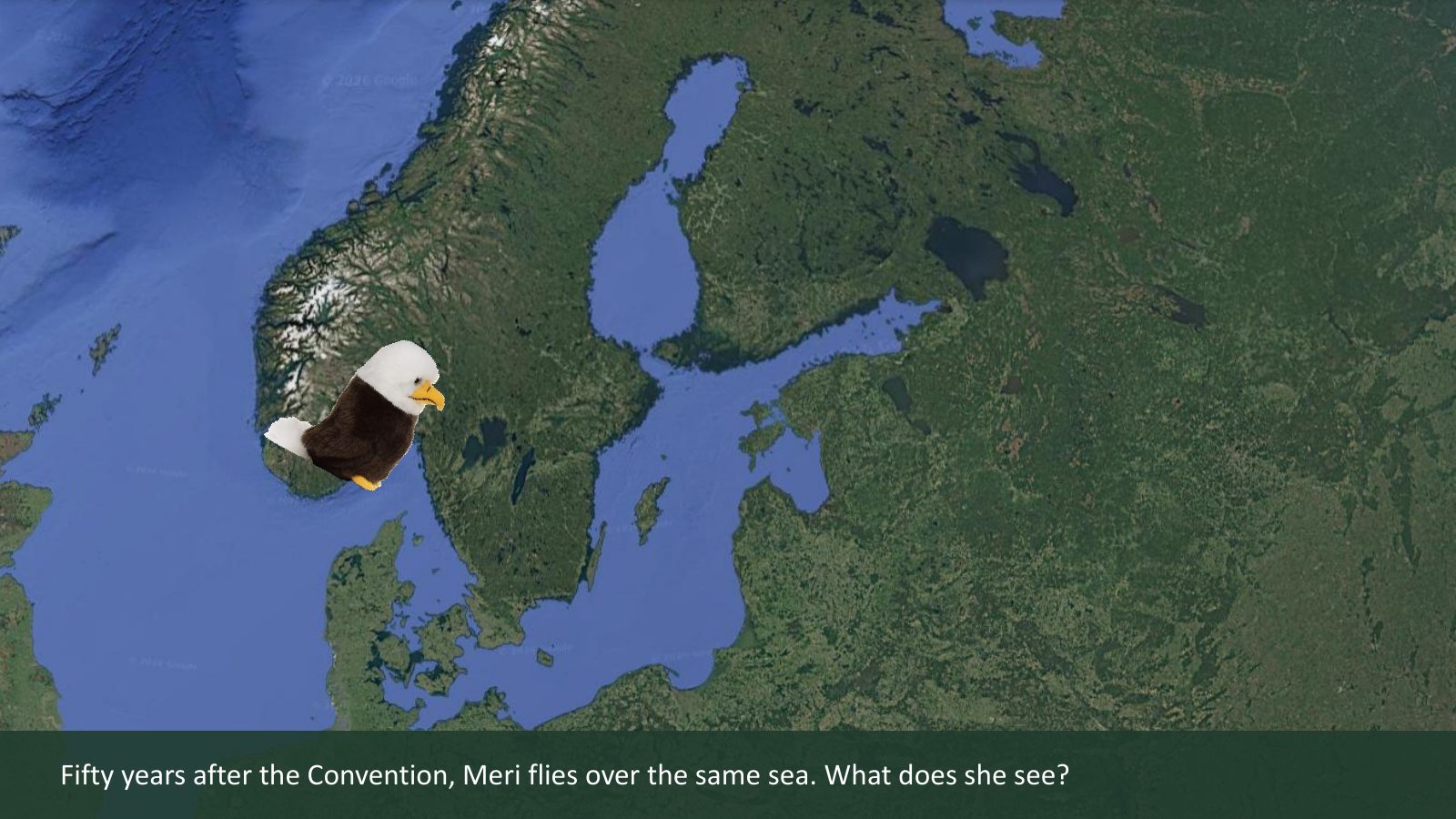
Slide 35 of 59: Fifty years after the Convention, Meri flies over the same sea. What does she see?
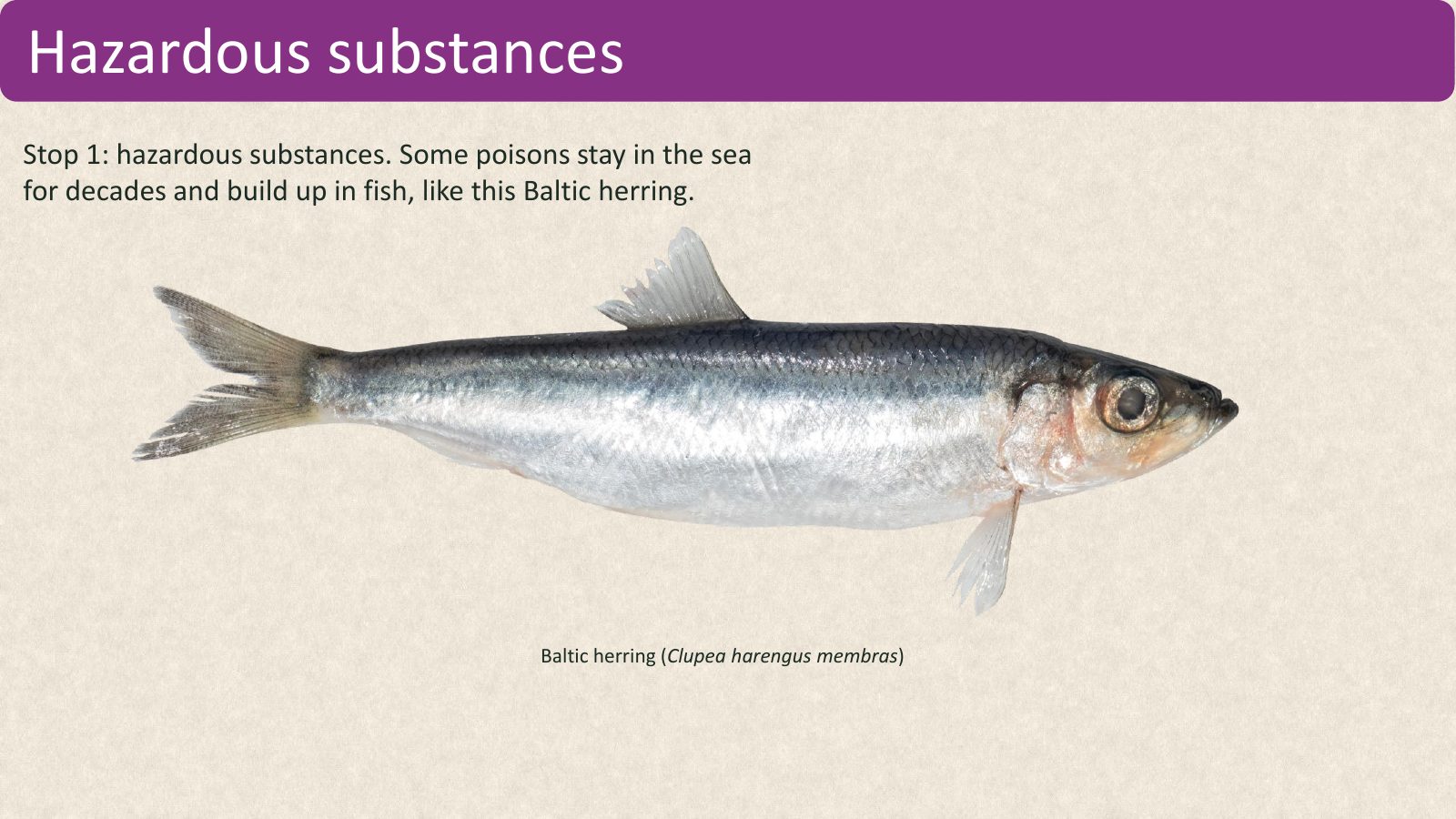
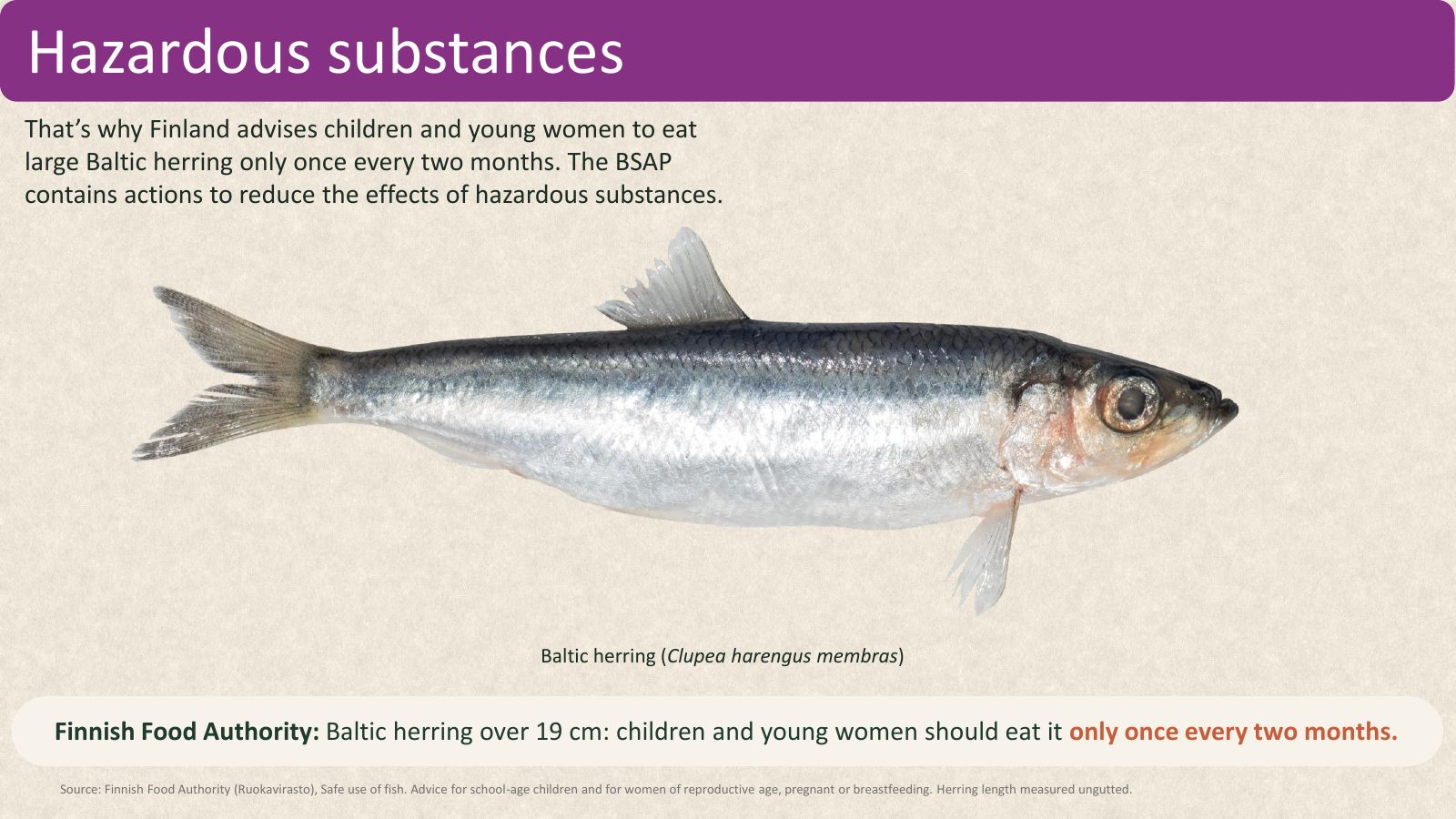
Slide 36 of 59: Hazardous substances Stop 1: hazardous substances. Some poisons stay in the sea for decades and build up in fish, like this Baltic herring. Baltic herring (C…
Slide 37 of 59: Hazardous substances That’s why Finland advises children and young women to eat large Baltic herring only once every two months. The BSAP contains actions to…
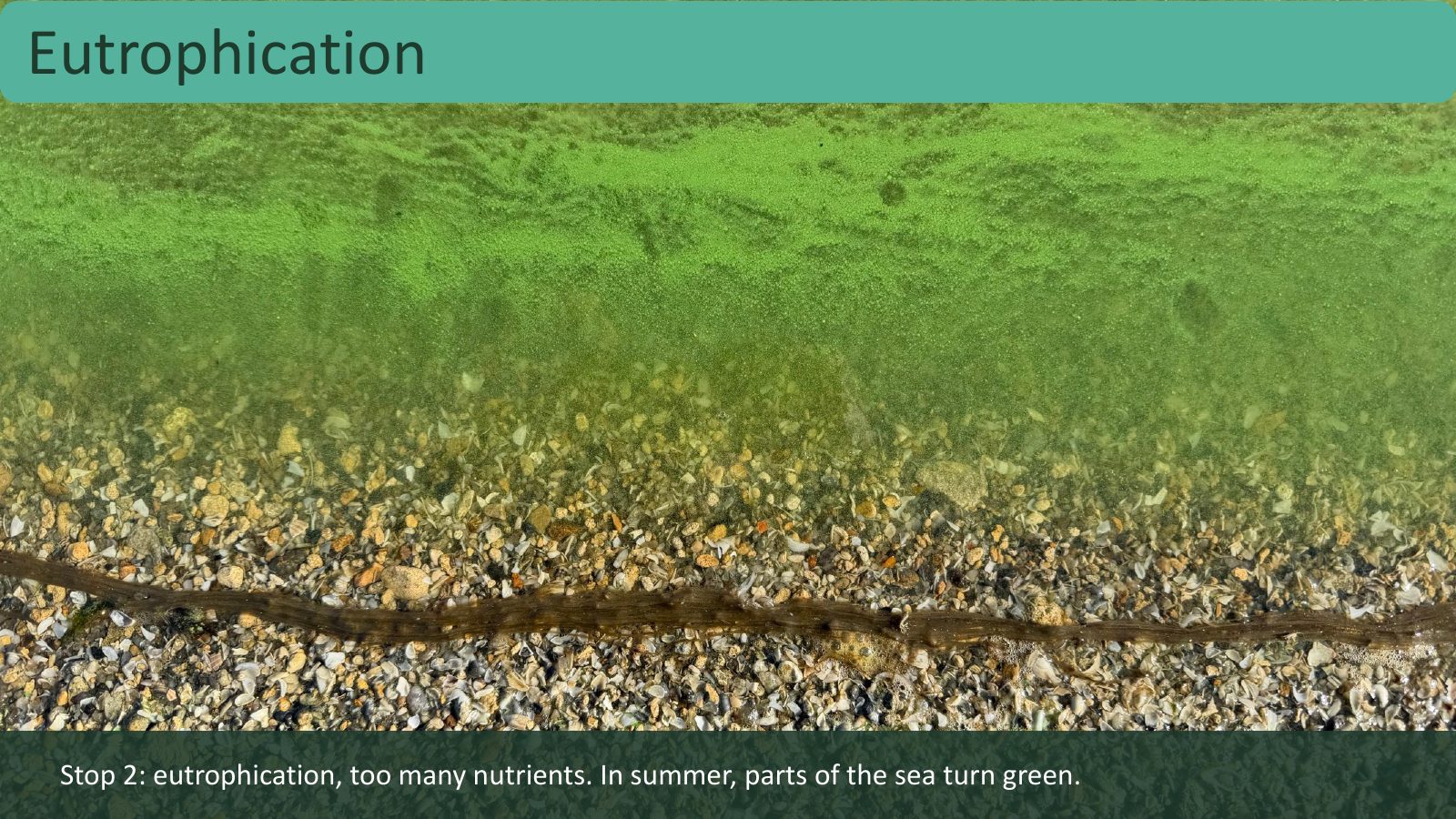
Slide 38 of 59: Eutrophication Stop 2: eutrophication, too many nutrients. In summer, parts of the sea turn green.
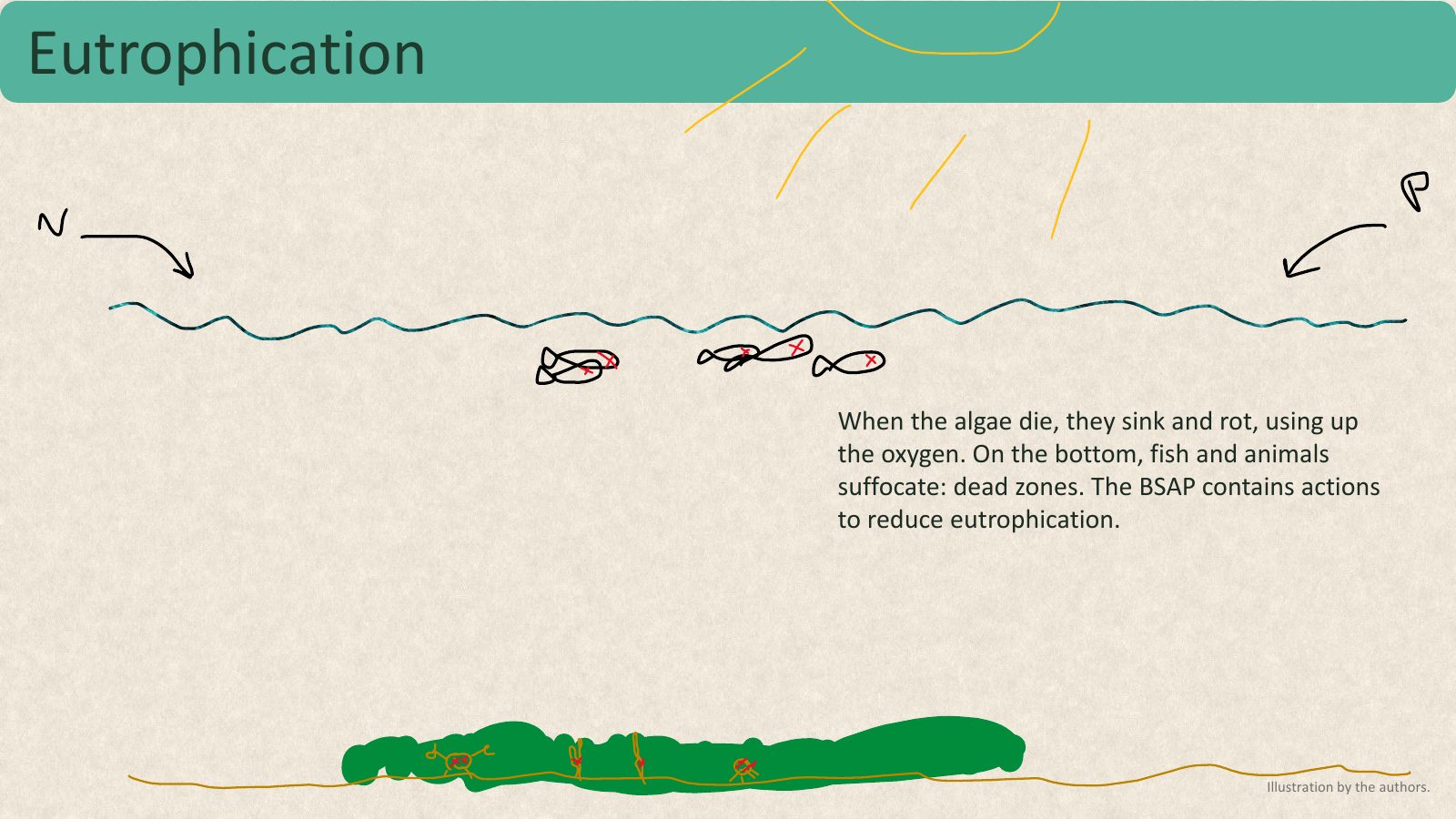
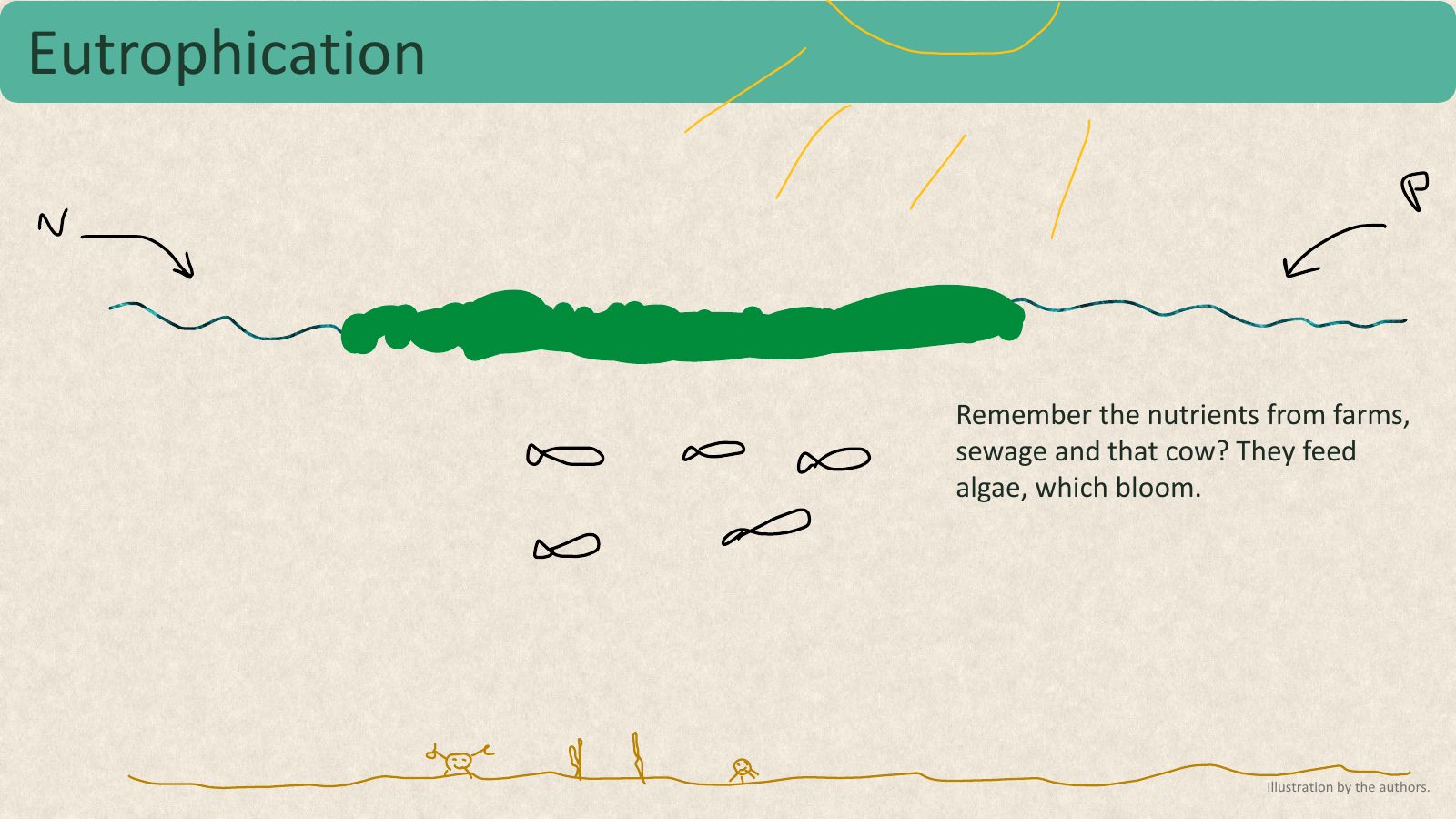
Slide 39 of 59: Eutrophication Remember the nutrients from farms, sewage and that cow? They feed algae, which bloom. Illustration by the authors.
Slide 40 of 59: Eutrophication When the algae die, they sink and rot, using up the oxygen. On the bottom, fish and animals suffocate: dead zones. The BSAP contains actions t…
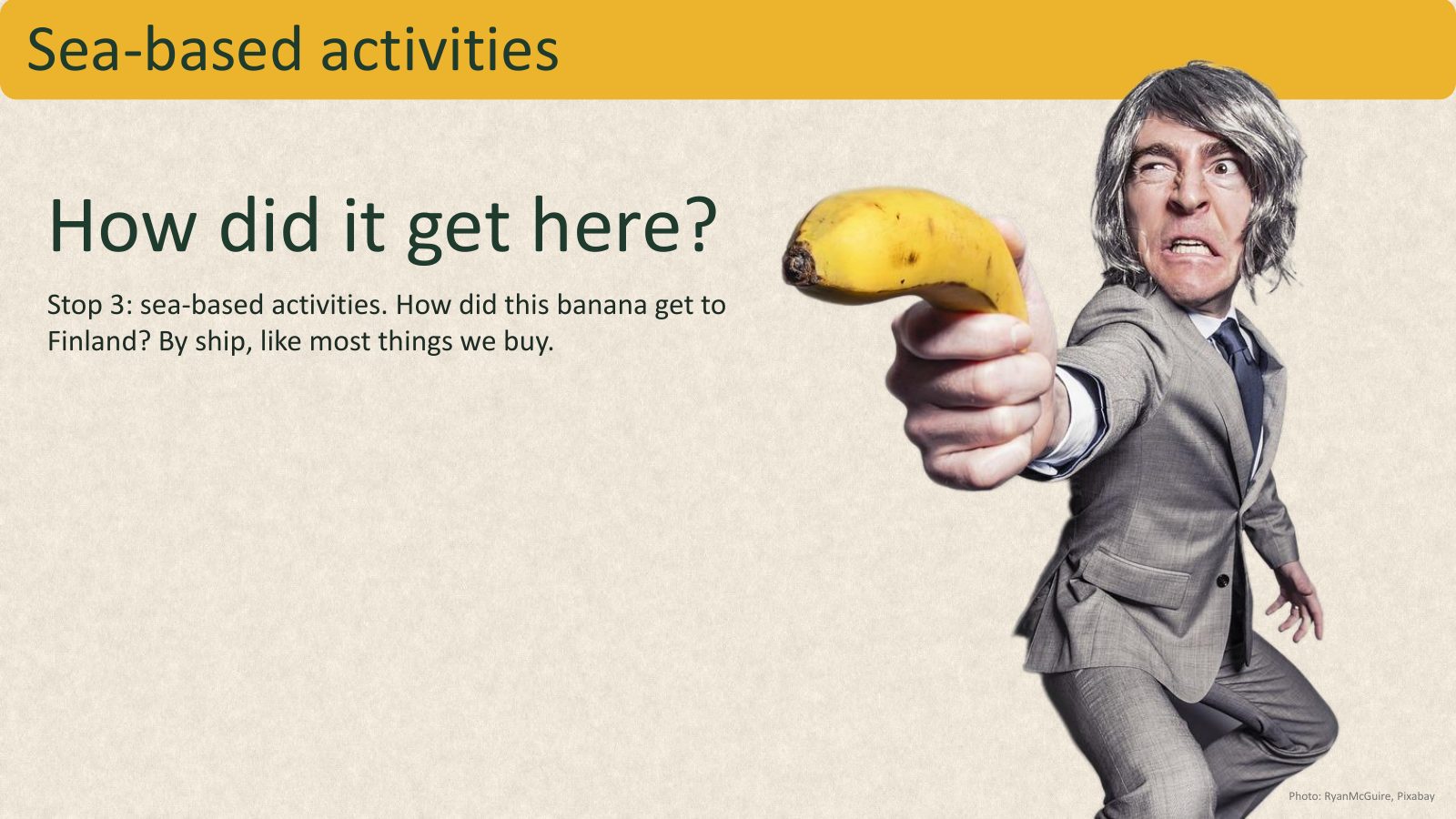
Slide 41 of 59: Sea-based activities How did it get here? Stop 3: sea-based activities. How did this banana get to Finland? By ship, like most things we buy. Photo: RyanMcGu…
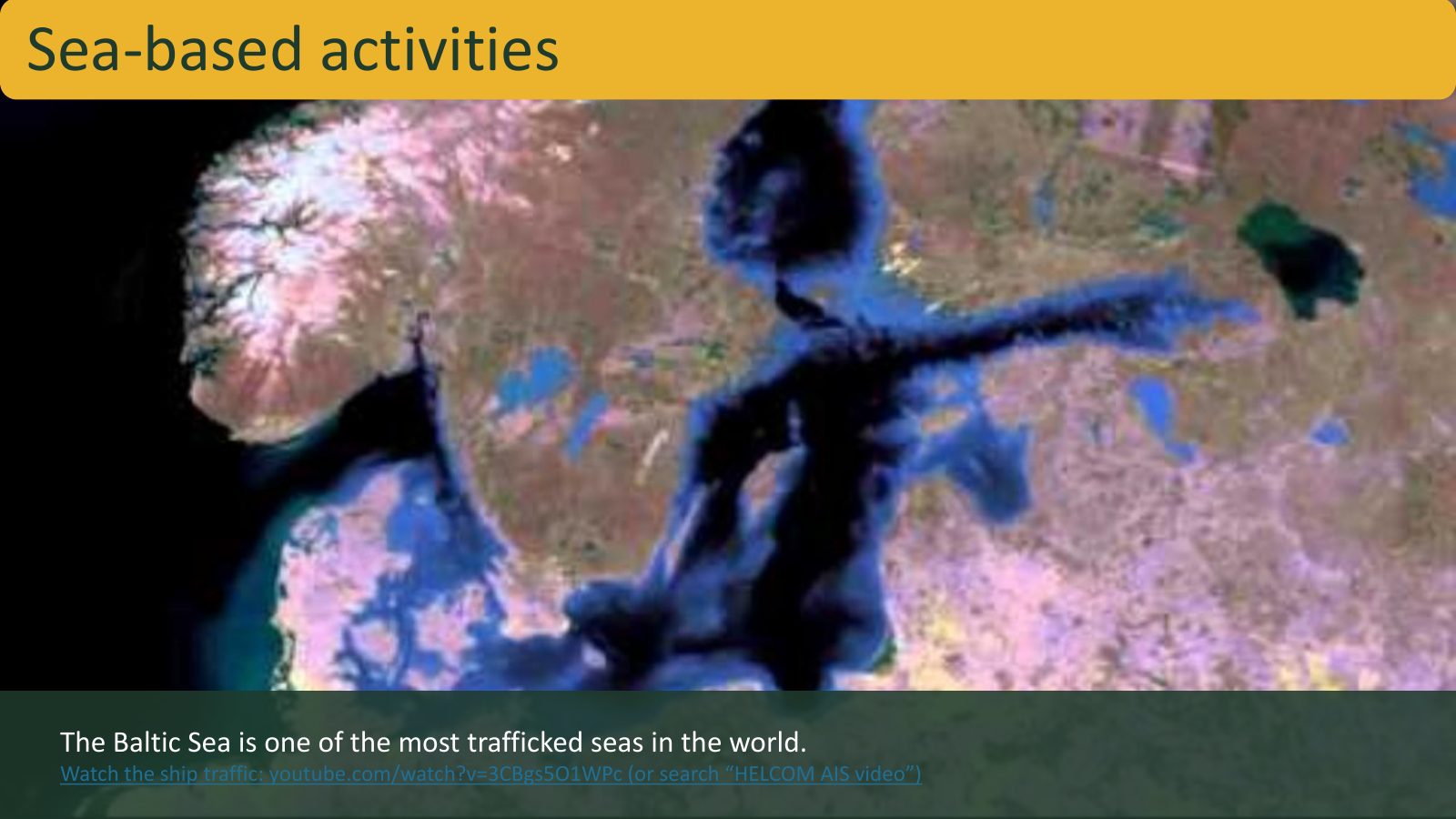
Slide 42 of 59: Sea-based activities The Baltic Sea is one of the most trafficked seas in the world. Watch the ship traffic: youtube.com/watch?v=3CBgs5O1WPc (or search “HELC…
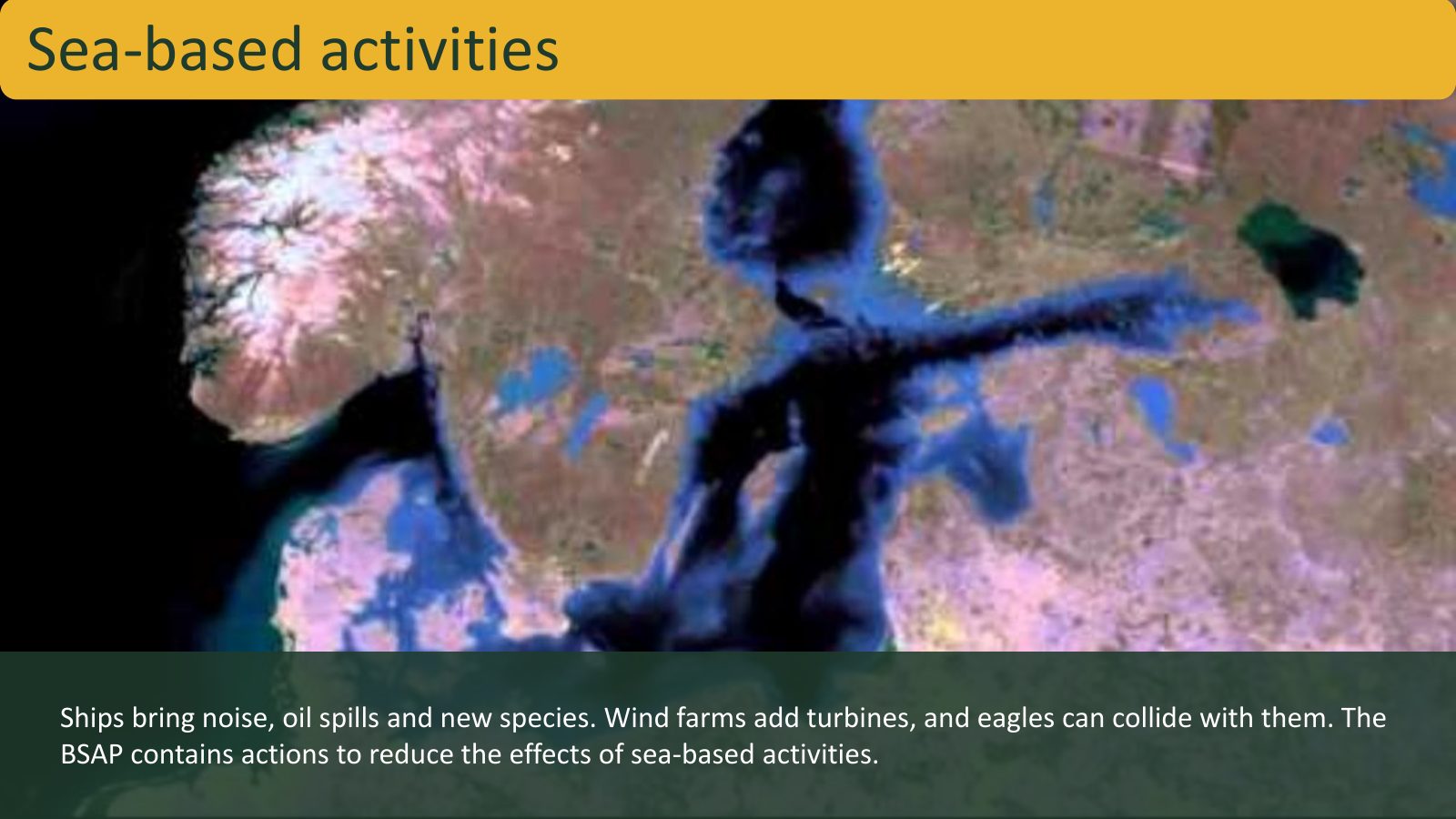
Slide 43 of 59: Sea-based activities Ships bring noise, oil spills and new species. Wind farms add turbines, and eagles can collide with them. The BSAP contains actions to r…
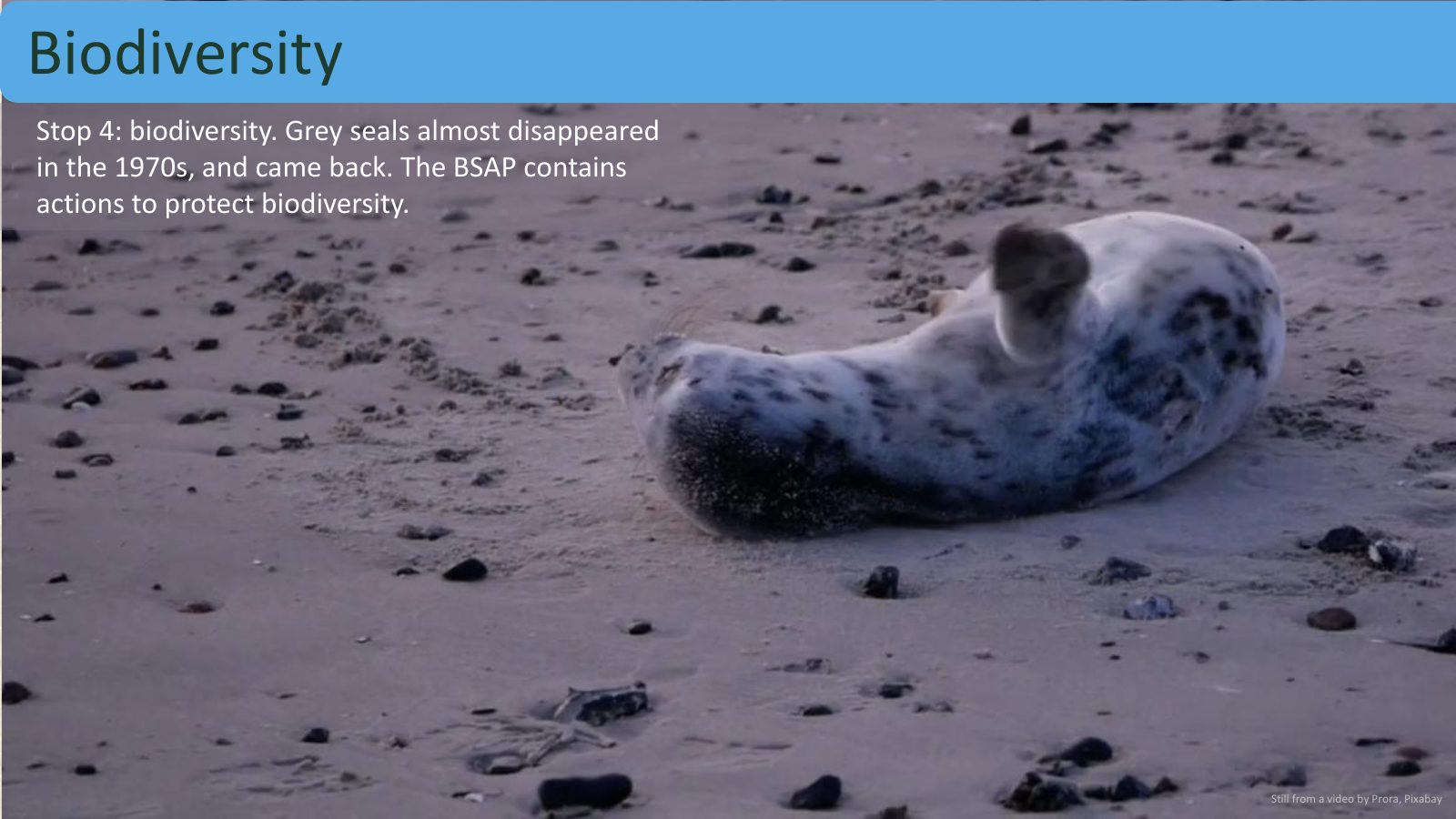
Slide 44 of 59: Biodiversity Stop 4: biodiversity. Grey seals almost disappeared in the 1970s, and came back. The BSAP contains actions to protect biodiversity. Still from a…
Slide 45 of 59: The scoreboard The promises are written down. But were they kept? Katja
Slide 46 of 59: Were the promises kept? 199 actions of the Baltic Sea Action Plan (2021) · status Sept 2026 ✓ ✓ ✓ ✓ ✓ ✓ ✓ ✓ ✓ ✓ ✓ ✓ 14% Accomplished ✓ ✓ ✓ ✓ 68% Partly accom…
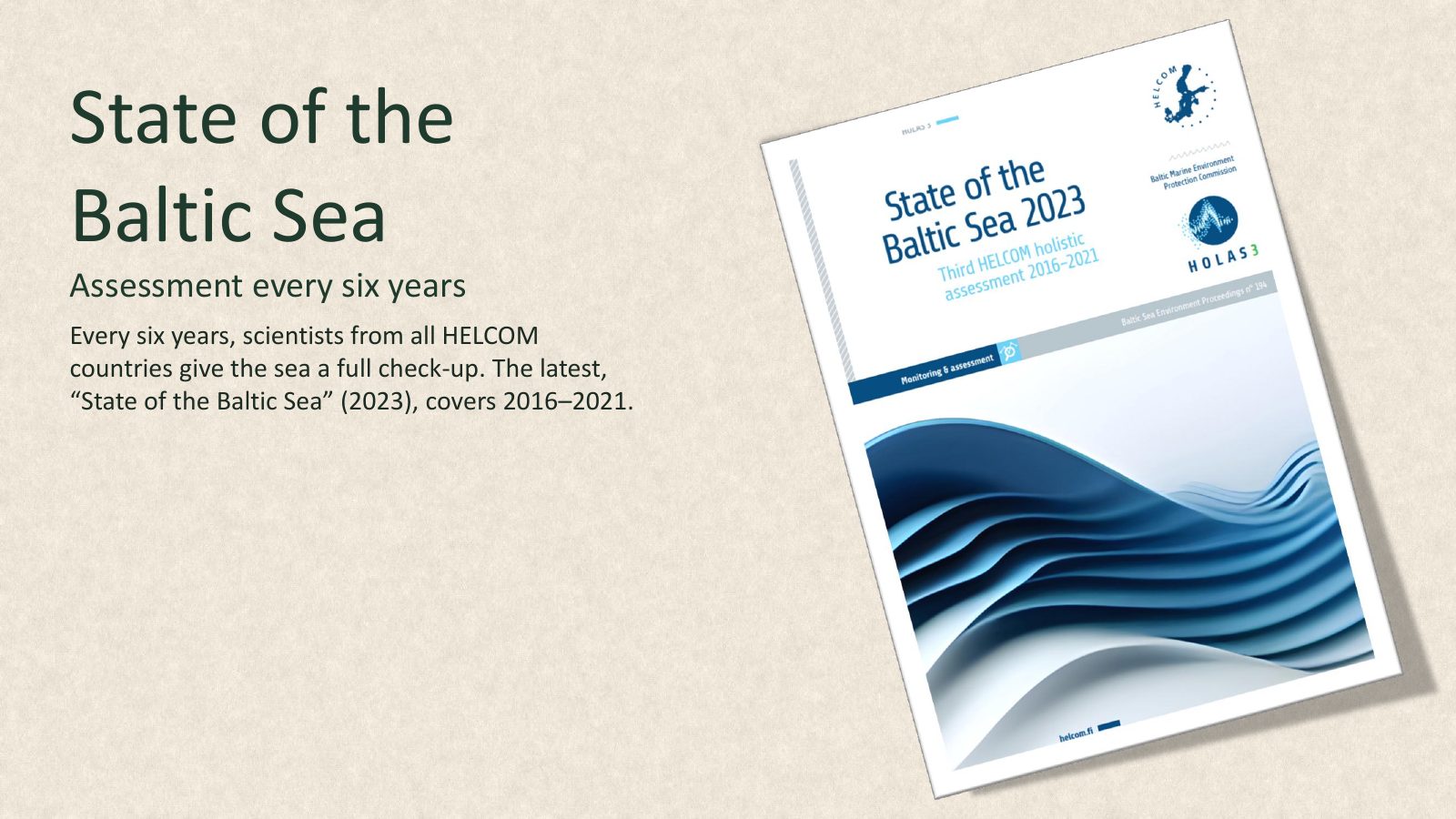
Slide 47 of 59: State of the Baltic Sea Assessment every six years Every six years, scientists from all HELCOM countries give the sea a full check-up. The latest, “State of…
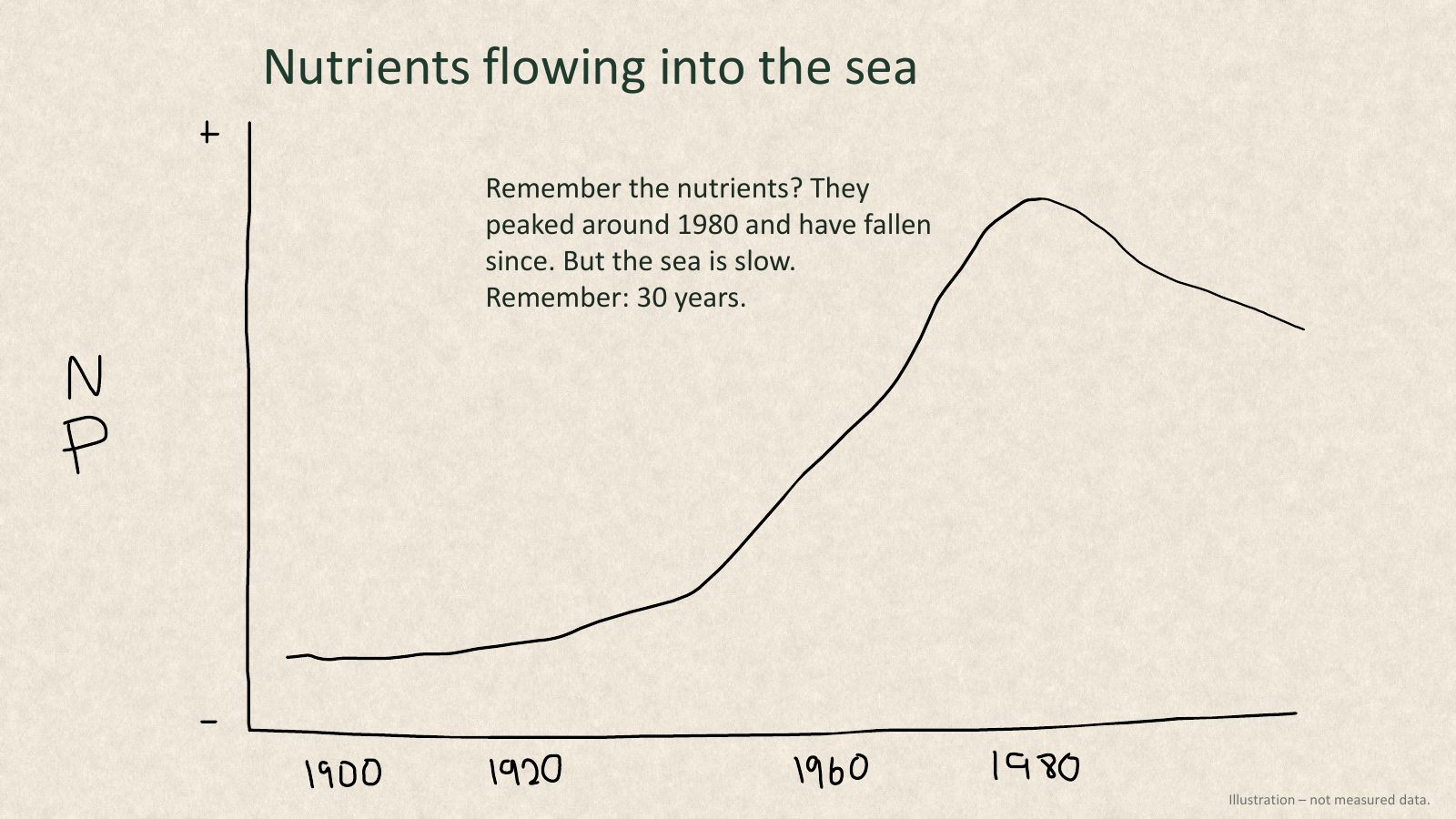
Slide 48 of 59: Nutrients flowing into the sea Remember the nutrients? They peaked around 1980 and have fallen since. But the sea is slow. Remember: 30 years. Illustration –…
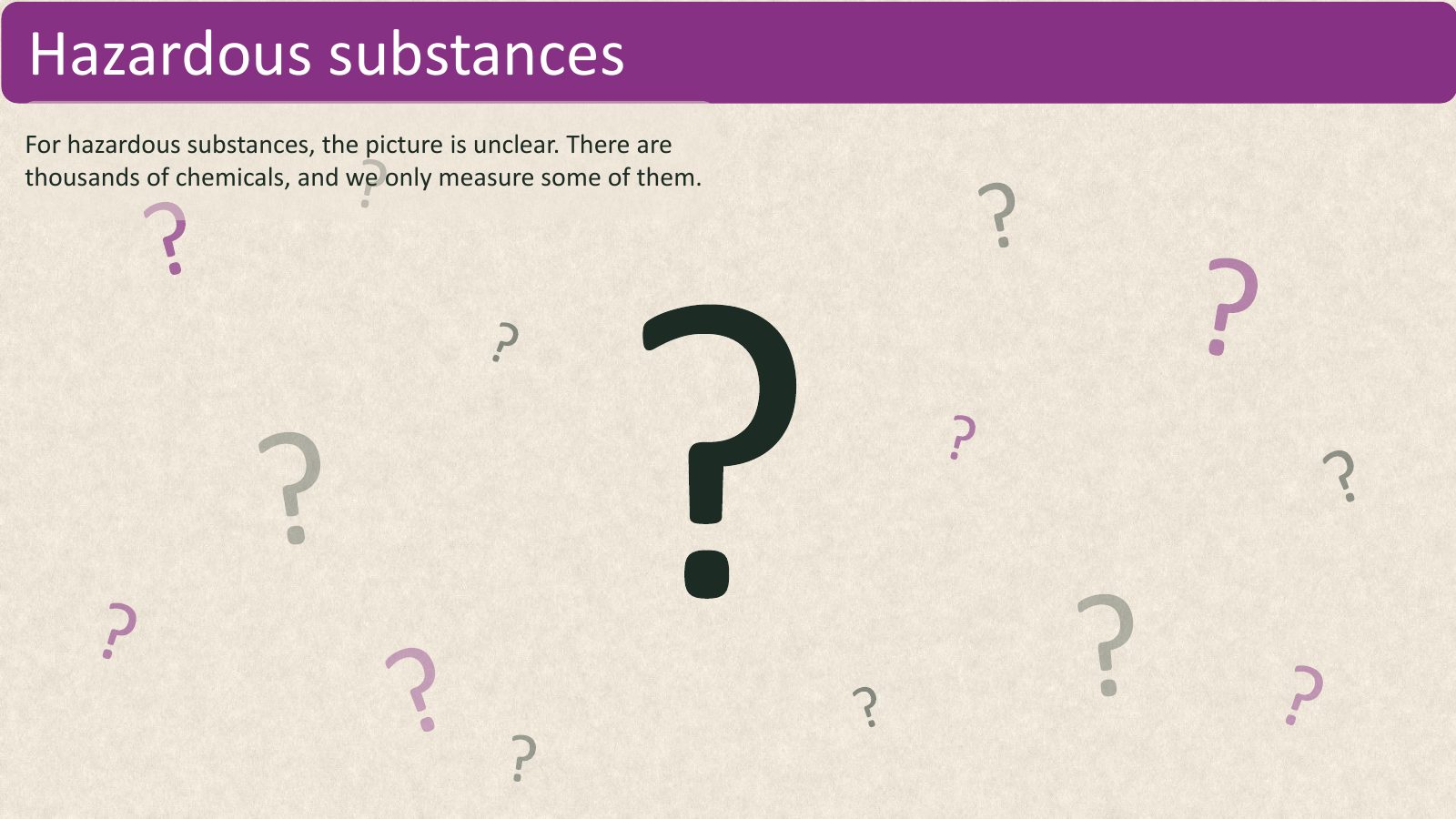
Slide 49 of 59: Hazardous substances For hazardous substances, the picture is unclear. There are thousands of chemicals, and we only measure some of them.
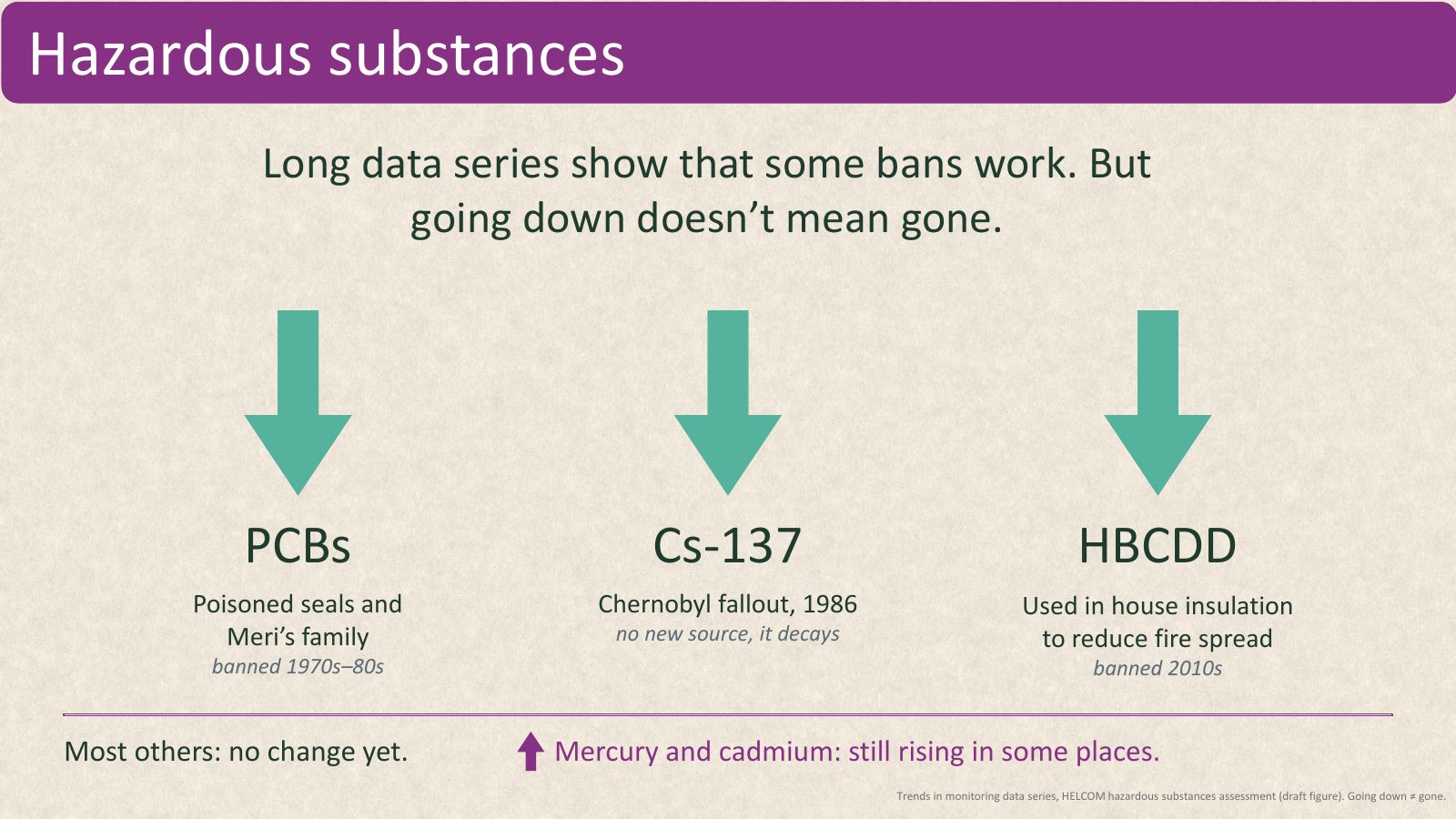
Slide 50 of 59: Hazardous substances Long data series show that some bans work. But going down doesn’t mean gone. PCBs Cs-137 HBCDD Poisoned seals and Chernobyl fallout, 198…
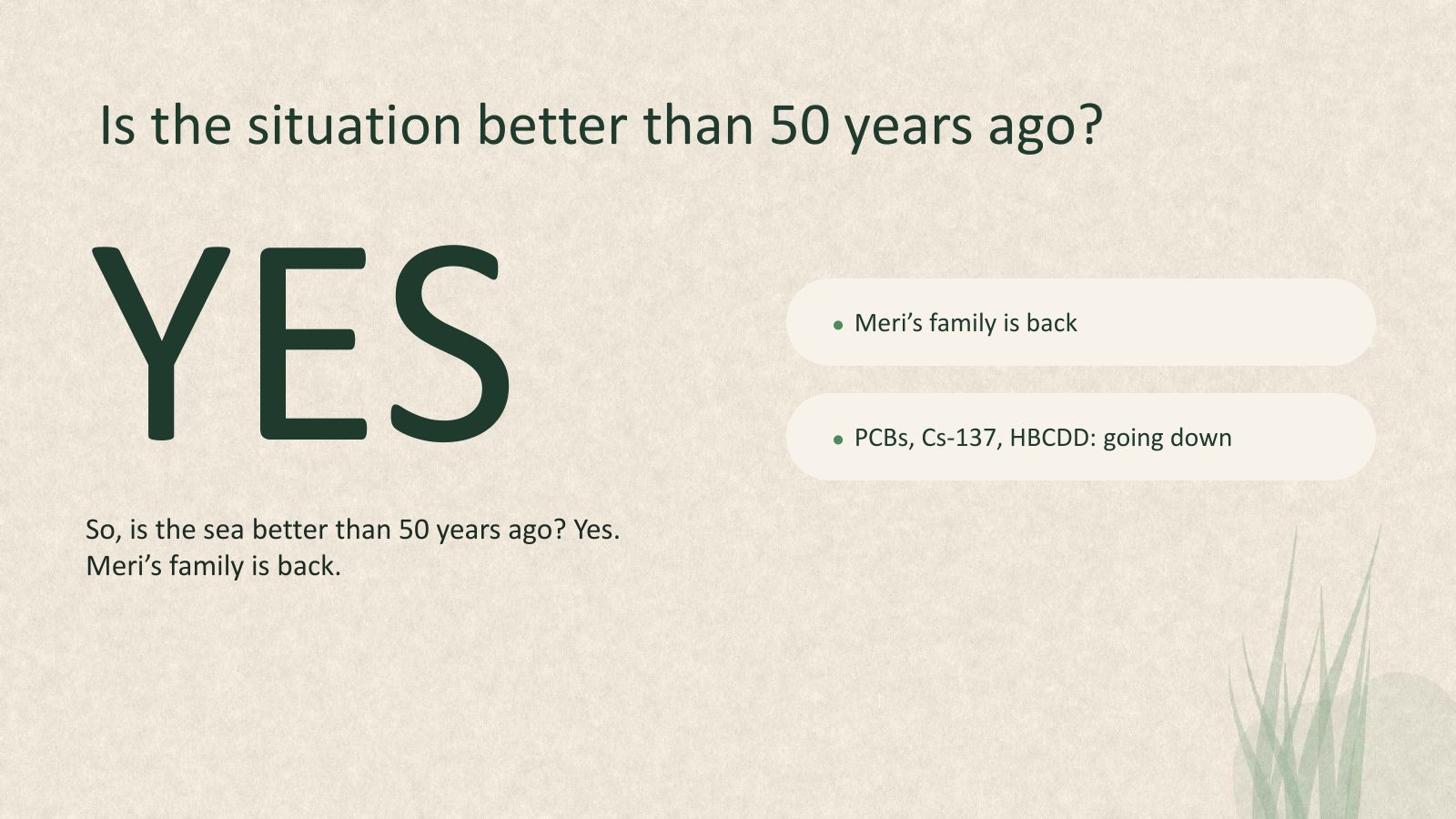
Slide 51 of 59: Is the situation better than 50 years ago? YES So, is the sea better than 50 years ago? Yes. Meri’s family is back. ● Meri’s family is back ● PCBs, Cs-137, H…
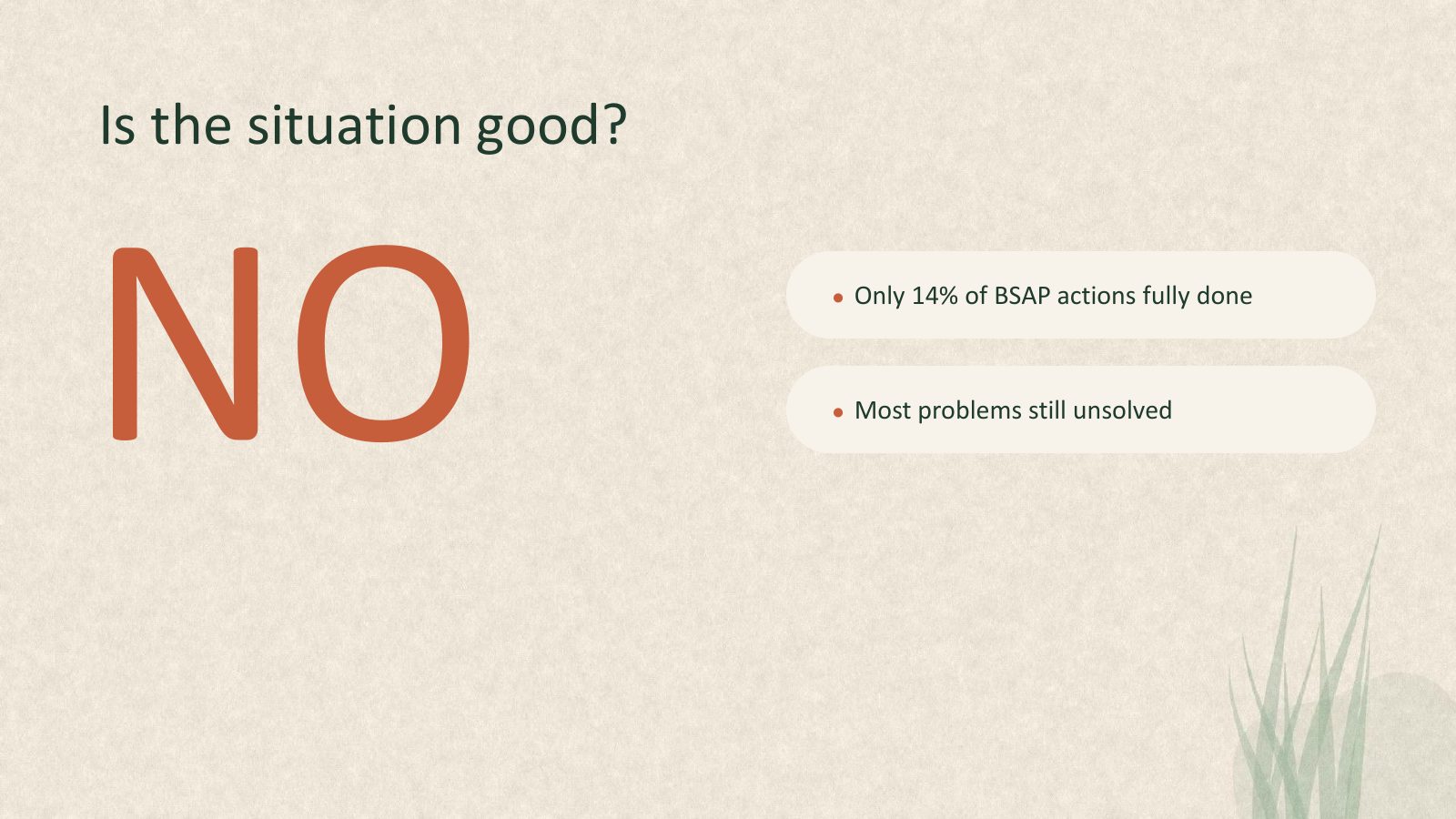
Slide 52 of 59: Is the situation good? NO ● Only 14% of BSAP actions fully done ● Most problems still unsolved
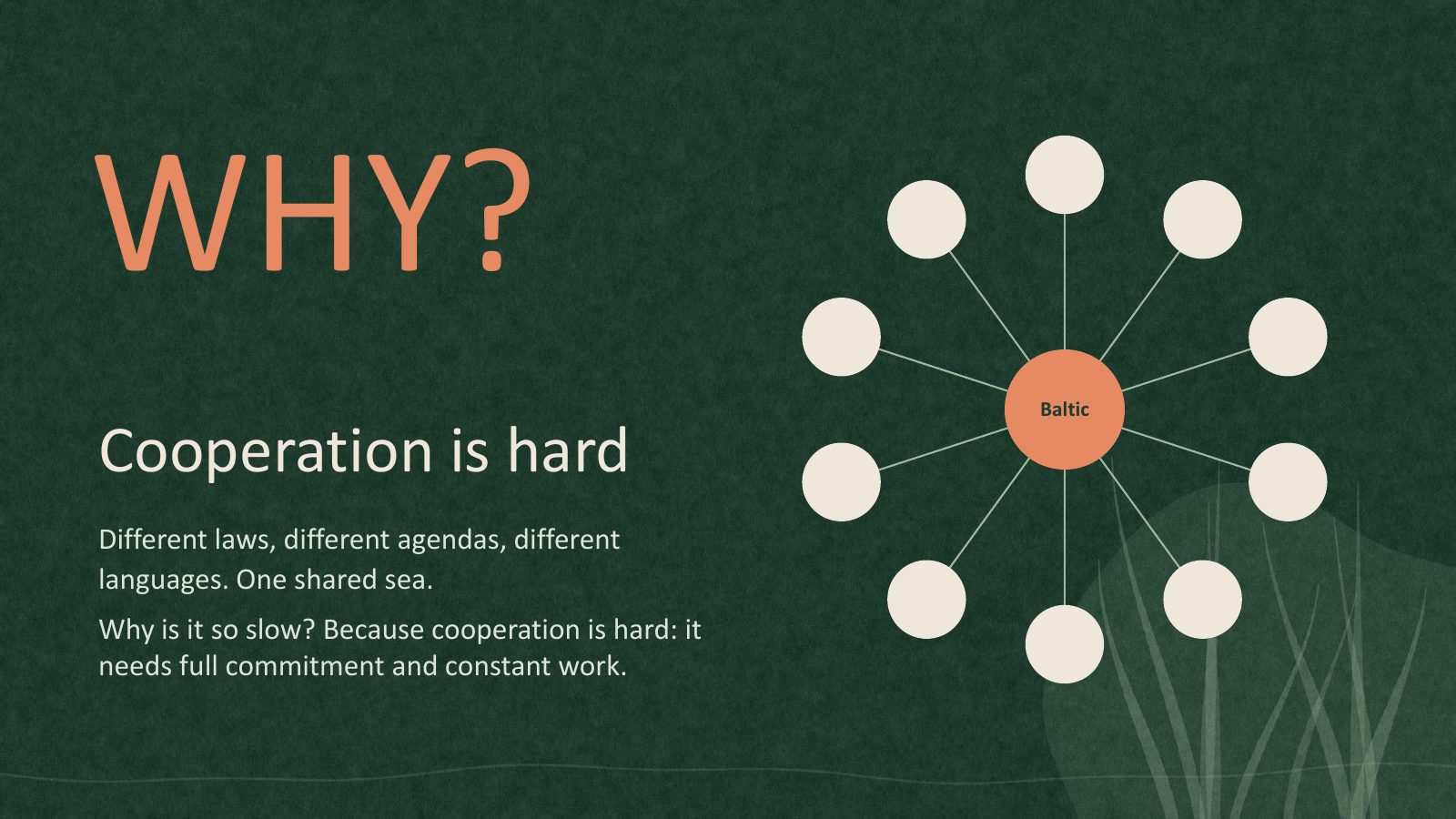
Slide 53 of 59: WHY? Baltic Cooperation is hard Different laws, different agendas, different languages. One shared sea. Why is it so slow? Because cooperation is hard: it ne…
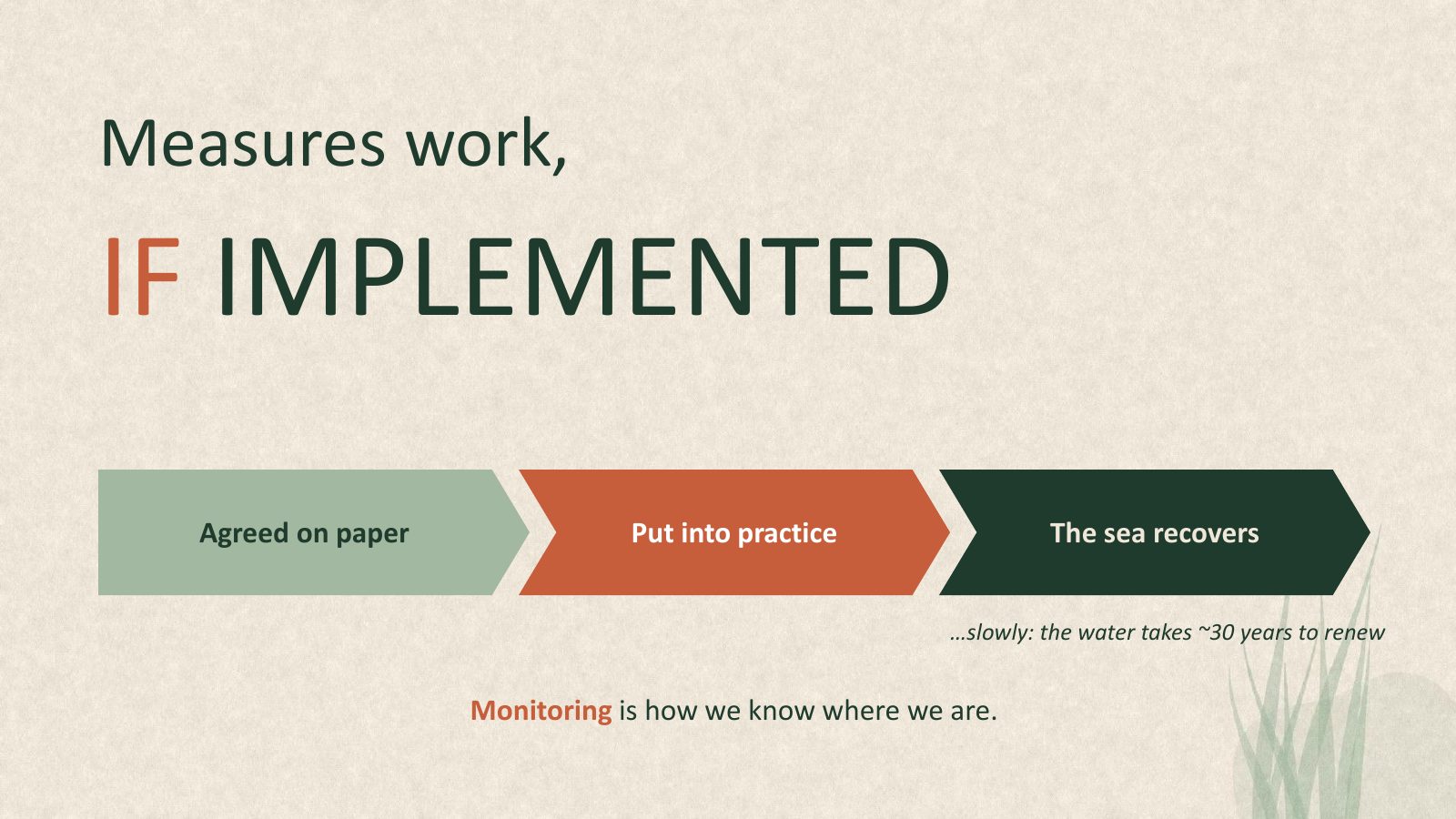
Slide 54 of 59: Measures work, IF IMPLEMENTED Agreed on paper Put into practice The sea recovers …slowly: the water takes ~30 years to renew Monitoring is how we know where…
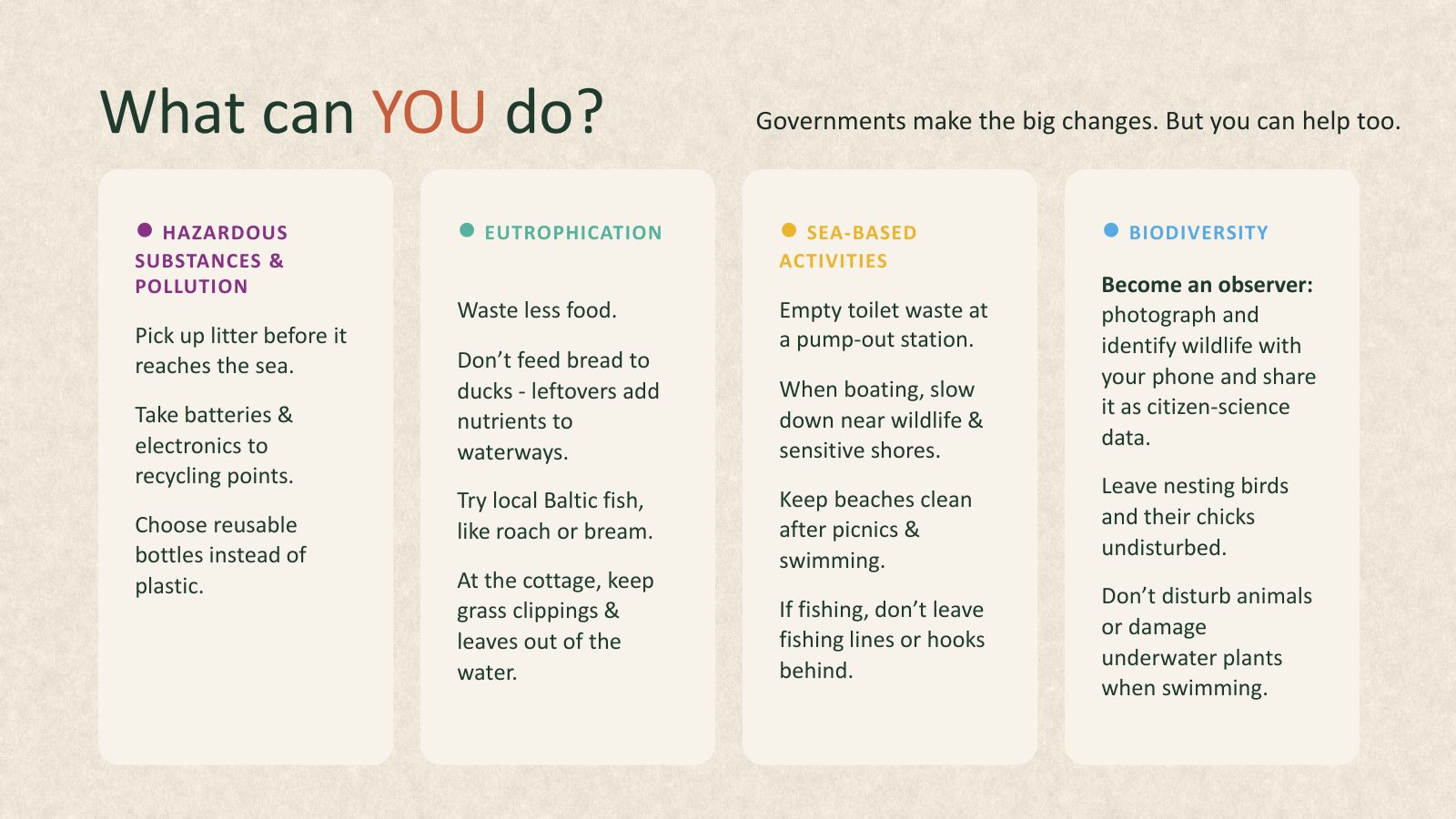
Slide 55 of 59: What can YOU do? Governments make the big changes. But you can help too. ● HAZARDOUS ● EUTROPHICATION ● SEA-BASED ● BIODIVERSITY SUBSTANCES & ACTIVITIES POLL…
Slide 56 of 59: “ Countries keeping a promise is how the sea recovers. One person keeping a promise is how it starts. — Katja & Manuel
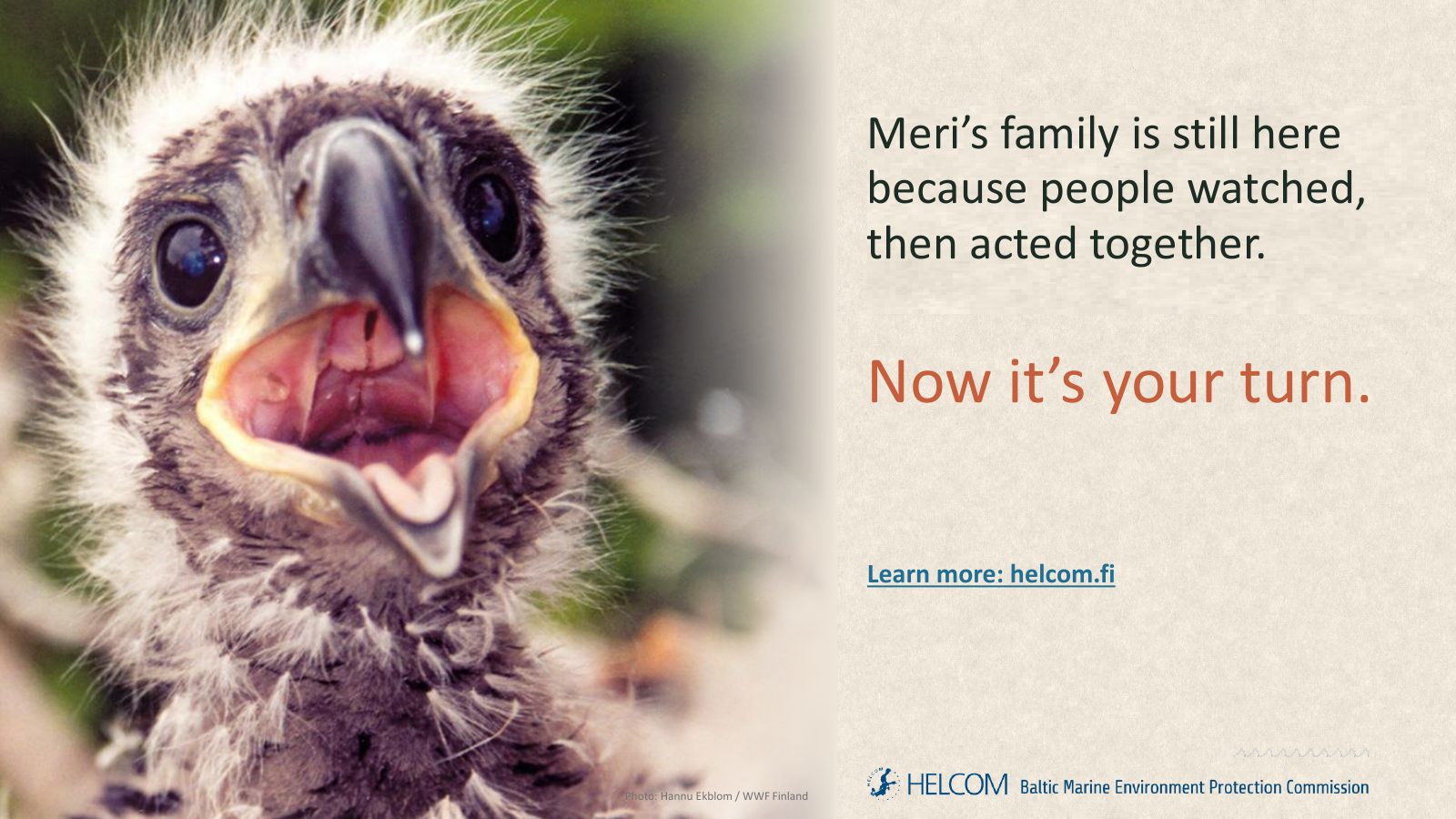
Slide 57 of 59: Meri’s family is still here because people watched, then acted together. Now it’s your turn. Learn more: helcom.fi Photo: Hannu Ekblom / WWF Finland
Slide 58 of 59: About this version This is a reader’s version of a talk that Katja Laingui and Manuel Frias (HELCOM) gave at Otaniemi upper secondary school, Espoo, on 27 Oc…
Slide 59 of 59: Sources and credits Facts and figures HELCOM (2023). State of the Baltic Sea – Third HELCOM holistic assessment 2016–2021 (HOLAS 3). HELCOM (2021). Baltic Se…
1 / 59
Swipe, use the arrows or the keyboard arrow keys. Download the slides (PDF, 8.3 MB)

← All stories